

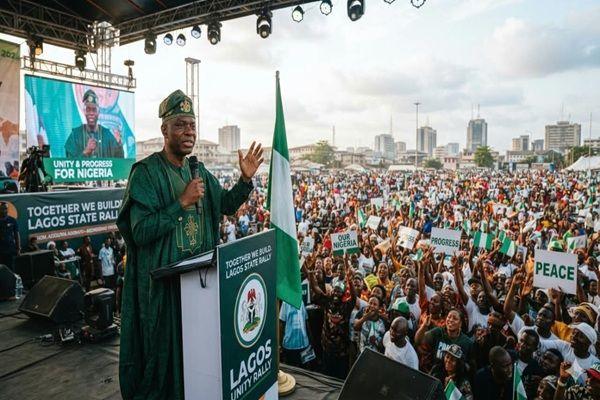
All over the world, political campaigns love slogans. They appear beneath photographs, on billboards and T-shirts, at rallies, in jingles, across social media and increasingly as hashtags. And sometimes they are brilliant. But a slogan is not a strategy. It is not even necessarily the message. A slogan is primarily a verbal expression of something deeper. Behind it should sit a clear proposition:
- What the candidate is offering
- Why it matters to citizens, and
- Why they should believe it.
Without this foundation, a slogan may end up strategically empty.
TO HAVE AN EFFECTIVE SLOGAN, START WITH THE PROPOSITION
In marketing communication, the proposition answers a fundamental question:
What are you promising me, and why should I care or even believe?
Effective political communication requires a similar discipline.
Suppose a hypothetical candidate adopts: A BETTER TOMORROW?
It sounds positive:
- But what does it mean?
- Better how?
- For whom?
- Why should anyone believe this particular candidate can deliver it?
- What evidence supports the promise?
Until these questions are answered, we have a line, not necessarily a proposition. A strong proposition gives substance to the communication. The slogan then gives the proposition memorable expression. Let’s look at what some political communication masters did:
OBAMA: THE IDEA BENEATH THE WORDS
Barack Obama’s 2008 campaign is frequently remembered for: CHANGE WE CAN BELIEVE IN. Its strength was not merely that change is an attractive word. The proposition worked because the campaign sought to establish Obama as representing a departure from the prevailing political order and connected that idea to issues ranging from the economy to healthcare and the Iraq war. “Change” therefore had an architecture beneath it:
- There was the word.
- There was the meaning.
- There were policy arguments.
- There was the candidate’s biography.
- And there was the political environment in which the proposition was being made.
These elements reinforced one another. That is considerably more powerful than simply discovering an attractive phrase and printing it everywhere.
BILL CLINTON: PUTTING PEOPLE FIRST
Bill Clinton’s 1992 campaign offers another useful example. One of its important formulations was: PUTTING PEOPLE FIRST. Again, the power was not simply in the wording. The campaign’s economic programme was explicitly presented under that title and linked investment, employment, healthcare and economic renewal to the circumstances of ordinary Americans. The proposition was therefore fundamentally citizen-centred. It answered an important communication question:
Who is this programme ultimately about? The voter. Voters ultimately process political propositions through another question: What does this mean for ME?
THATCHER: WHEN THE SLOGAN CARRIES AN ARGUMENT
The famous 1979 British Conservative advertisement: LABOUR ISN’T WORKING demonstrates how a short line can carry a much larger proposition. The campaign showed a long unemployment queue. Three words therefore communicated an argument:
- There is a serious economic problem.
- The incumbent government bears responsibility.
- An alternative is required (and is being offered)
Whether one agreed with that argument was a political choice. From a communication standpoint, however, the relationship between the visual, headline and proposition was remarkably clear. The slogan was not floating independently. It was doing strategic work.
REMEMBER,EVERY PROPOSITION NEEDS EVIDENCE
It’s not enough to simply throw slogans around because the copywriter loves the sound of it; political communication becomes dangerous when promise travels much faster than proof. And sadly we have a lot of this in our environment. Communication advisers and the candidates must always know that:
- If a candidate’s proposition is competence, demonstrate competence.
- If it is renewal, show what is genuinely new.
- If it is economic opportunity, explain how opportunity will be created.
- If it is security, articulate a credible approach.
- If it is integrity, the candidate’s record becomes part of the evidence.
In advertising terminology, we might call this the reason to believe. Political propositions require reasons to believe perhaps even more than commercial propositions because the stakes are considerably higher. Citizens are not choosing toothpaste. Not a cola drink. Not a bank. Not a beer. They are choosing people who may exercise enormous authority over their lives.
PLEASE, DON’T FALL IN LOVE WITH WORDS
This is where communication professionals must sometimes challenge campaign organisations. Everyone can become excited about a clever line because:
- It rhymes.
- looks wonderful on a billboard.
- The hashtag works.
- The candidate loves it.
- Supporters begin chanting it.
But the strategist and the agency must still ask:
- What exactly are we promising?
- What voter problem or challenge does this address?
- What makes it different?
- What evidence supports it?
If those questions produce weak answers, more work is required, regardless of how attractive the slogan sounds. One of the earliest lessons I learned in my career is that effective advertising is NOT about sloganeering; indeed, sloganeering is not advertising!
WHAT THE AGENCY MUST DO? BUILD FROM THE INSIDE OUT
The sequence should therefore be something like this:
- What is the citizen need?
- What is the candidate positioning?
- What is the campaign proposition?
- Do you have strong evidence to support the proposition?
- Can you now develop an appropriate and relevant messaging?
- From it can you develop a relevant and appropriate slogan
- What execution then follows?
Unfortunately, campaigns sometimes reverse the process. They begin with the slogan. Then attempt to construct meaning around it. That is communication working backwards. Strategy should determine creative expression, not the other way around.
HERE IS A SIMPLE TEST FOR ALL COMMUNICATION PEOPLE
There is an easy exercise campaign communication teams can conduct: Remove the slogan from the poster. Now explain the candidate’s proposition in one clear sentence. If nobody can do it, the campaign may have a slogan without a strategy. If the proposition is clear, relevant, distinctive and believable, then the creative people have something powerful to work with:
- They can then find the words.
- They can create the imagery.
- They can produce the advertising.
- They can develop the content.
- But first, give them something worth communicating.
- Because elections are not won simply by finding words that sound good.
Remember, effective political communication begins by establishing an idea that means something.

Administrator contributes reporting and analysis on advertising for Brandish.
Keep Reading

‘Lolu Akinwunmi writes: CONSISTENCY: ONE CAMPAIGN. ONE MESSAGE. ONE VOICE.

Are Nigerian service providers poised for Extra Mile following Customer Service Week?

Sterling Bank collaborates with Cascador in $200 million fund to derisk startup business loans

Buy now, pay later: is Nigeria ready for a new culture of consumer credit?

UBA secures landmark court victory in a N156Bn debt recovery case against the Vaswani Brothers, owners of the Stallion Group

No comments yet — be the first to comment.