

By Ben Ndubuwa
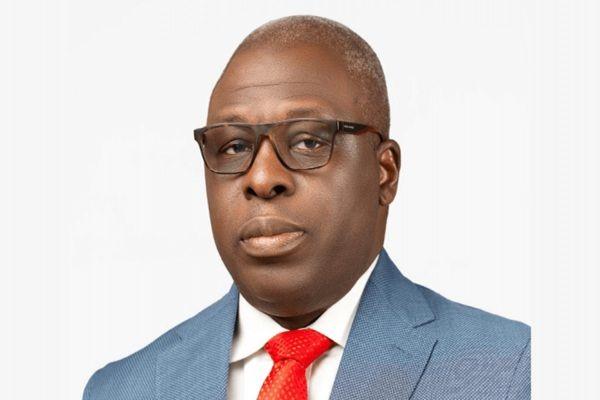
The Chairman of the Independent Petroleum Producers Group (IPPG), Adegbite Falade, has said Africa’s widening energy investment deficit represents a major opportunity for global investors, with the continent requiring more than $200 billion annually in energy investments by 2030.
Falade, who spoke on “Africa’s Upstream Outlook: Setting the Strategic Tone” at the opening ceremony of the just-concluded AOW: Energy 2026 in Accra, Ghana, said Africa’s vast oil and gas resources, rising energy demand and growing indigenous participation in the petroleum industry had created significant opportunities for investors seeking long-term growth.
The conference, themed “Investing in African Natural Resources,” focused on accelerating exploration, unlocking upstream partnerships and aligning policy, infrastructure and markets to drive sustainable investment in Africa’s energy sector.
Falade, however, warned that Africa could lose the opportunity if governments and industry stakeholders failed to urgently address the continent’s financing and infrastructure deficits.
According to him, Africa holds more than 125 billion barrels of proven crude oil reserves and over 620 trillion cubic feet of proven natural gas reserves, representing about nine per cent and eight per cent of global oil and gas reserves respectively.
Despite its resource wealth, he said, Africa attracts only about six per cent of global exploration spending and upstream capital, highlighting a huge mismatch between its resource endowment and the capital deployed to develop it.
He described Africa as both the world’s most energy-endowed and energy-poor continent, noting that the continent produces about eight million barrels of crude oil daily but refines barely half of that volume.
The situation, he said, forces African countries to spend more than $60 billion annually on refined petroleum product imports.
Similarly, Africa produced about 262 billion cubic metres of gas in 2025, while domestic consumption was approximately 185 billion cubic metres, leaving substantial quantities available for export even as millions of Africans continue to face energy shortages.
Falade said the continent’s energy-access deficit remained enormous, with nearly 600 million Africans lacking access to electricity.
He argued that the figures represented not merely a development challenge but a substantial investment pipeline covering upstream exploration, gas processing, pipelines, power generation, refining, petrochemicals and renewable energy.
Falade identified gas infrastructure as one of Africa’s most significant investment frontiers, warning that the continent’s enormous gas reserves would remain underutilised without adequate infrastructure to process and transport them.
“Reserves without pipelines are simply stranded molecules benefiting no one,” he said, stressing that upstream investment must be matched by substantial investment in midstream infrastructure.
According to him, natural gas already accounts for about 40 per cent of Africa’s electricity generation, but the continent has less than 50,000 kilometres of gas pipelines, compared with more than 200,000 kilometres of interconnected oil and gas trunk pipelines in Europe.
He therefore called for increased investment in gas pipelines, processing plants, power grids and export infrastructure to transform Africa’s gas reserves into productive economic assets.
The IPPG chairman also urged investors to explore opportunities beyond individual national markets by taking advantage of deeper regional integration under the African Continental Free Trade Area (AfCFTA).
He cited the West African Gas Pipeline, which has transported Nigerian gas to Benin, Togo and Ghana for 15 years, as evidence that cross-border energy infrastructure could succeed in Africa.
Falade proposed an AfCFTA Energy Services Protocol to facilitate intra-African hydrocarbon trade, cross-border pipelines and infrastructure development, as well as a Pan-African Technical Exchange Programme to improve the movement of technical skills across producing countries.
He said deeper integration could create larger regional markets for gas-to-power, refining, petrochemicals and energy services.
Falade also positioned African indigenous oil and gas companies as increasingly important investment partners.
He said Nigerian indigenous operators, which accounted for less than three per cent of national production more than three decades ago, now contribute more than half of the country’s crude oil and gas output following the divestment of several onshore and shallow-water assets by international oil companies.
According to him, about 200,000 barrels of oil per day have been added to Nigeria’s national production by just three indigenous operators over the past year.
He said the development demonstrated the capacity of indigenous companies to revive mature and previously underperforming assets through technical expertise, capital deployment and faster decision-making.
“The divestment era is not an exit. It is an invitation to a new kind of partnership — technology, capital and capability alongside local ownership and local urgency,” Falade said.
He further identified the Africa Energy Bank, established through a partnership between the African Petroleum Producers Organisation and Afreximbank, as an important potential vehicle for bridging the continent’s energy financing gap.
The bank, headquartered in Abuja, has an initial capital base of $5 billion, with an ambition to mobilise up to $10 billion in its first phase and grow towards $15 billion by 2030.
Falade said the bank’s success would depend on African producers developing commercially viable and bankable projects capable of attracting capital.
While advocating continued investment in hydrocarbons, he said Africa should not have to choose between oil and gas and renewable energy.
He noted that Africa attracted only about two per cent of global clean-energy investment last year despite its huge solar, hydro, geothermal and wind resources.
His message to investors, therefore, was one of diversification, with gas and renewable energy deployed together to address Africa’s energy-access deficit and support industrialisation.
“Africa’s energy must first power Africa,” Falade said, calling for greater investment in gas-to-power, gas-to-fertiliser, gas-to-industry, refining, petrochemicals, LPG for clean cooking and reliable electricity for manufacturing.
He urged African governments to provide fiscal stability, faster approvals and contract sanctity, while calling on financiers and insurers to assess African projects based on operational evidence rather than prevailing perceptions of risk.
According to him, the next phase of Africa’s energy development requires a new investment model in which international capital, technology and expertise work alongside increasingly capable African indigenous companies.

Administrator contributes reporting and analysis on energy for Brandish.
Keep Reading

Nigeria and India target $15 billion trade revival as Modi seeks renewed crude oil purchases

Aliko Dangote plans Africa fuel network across East, Central and Southern Africa in $50 billion expansion

Dangote acquires 25% stake in Kenya pipeline company, deepens East African energy push
Dangote’s ₦5,250 investment opportunity: the billions behind small investors’ money

Africa’s recycling industry opens new business opportunities for entrepreneurs and investors

No comments yet — be the first to comment.