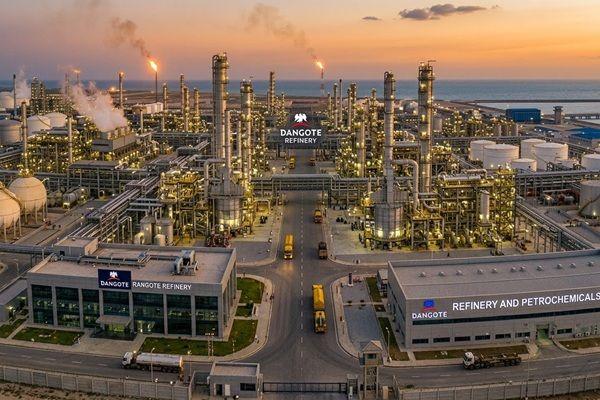
As thousands of Nigerians rush to buy shares in Dangote Petroleum Refinery, the conversation has largely centred on what investors stand to gain from owning a piece of one of Africa’s biggest industrial projects. But behind the excitement over affordable shares lies another important business story: the enormous amount of capital the refinery could raise by bringing ordinary Nigerians and investors across Africa into its ownership structure.
With a minimum subscription of ₦5,250 for 10 shares priced at ₦525 each, the offering has deliberately lowered the financial barrier to participation. For someone earning a modest income, the amount may appear small enough to risk in the hope of future returns. For a company seeking to raise ₦2.15 trillion through the sale of 4.1 billion shares, however, millions of such small subscriptions could add up to a substantial pool of capital. The offer period has been extended to October 27, 2026.
This is where the investment story becomes more interesting than the familiar promise of owning shares in a successful business. Every investor is looking at the opportunity from an individual perspective: how much could my money grow, and what might I earn in dividends? The company, meanwhile, is looking at the combined purchasing power of a large investor base and what that capital can make possible.
The difference in scale is significant. One person investing ₦5,250 may not consider the amount a major financial commitment. But if one million people invest that sum, their combined subscriptions would reach ₦5.25 billion. If five million people each invest ₦5,250, the total would rise to ₦26.25 billion. At 10 million investors, the same minimum subscription would generate ₦52.5 billion.
These figures are illustrative calculations, not confirmed subscription totals. They demonstrate how an investment that appears modest at the individual level can become substantial when participation expands across a population.
The refinery's actual fundraising target is considerably larger. The proposed sale of 4.1 billion shares at ₦525 each is designed to raise approximately ₦2.15 trillion if fully subscribed. That means the transaction is not simply an opportunity for individuals to buy shares; it is also a major capital-raising exercise for the business.
For Aliko Dangote and the company, the attraction of a broad shareholder base extends beyond the money raised in the immediate offering. A larger pool of shareholders can broaden public ownership, increase the company's visibility among investors and potentially create a foundation for future capital-market activity. A publicly listed business may also find it easier to attract institutional investors and raise additional funding over time, depending on its performance and market conditions.
However, one important distinction must be made: the money raised from selling shares is not the same as profit. The company does not automatically earn the entire amount as revenue from its ordinary operations. Proceeds from a new share issue represent equity capital, while profit comes from the company's business activities after expenses and other applicable charges.
The distinction matters because the public discussion sometimes treats the large number of people participating in an offer as evidence of immediate financial gain for the company and its founder. In reality, the financial benefit depends on the structure of the transaction, how the proceeds are used and the obligations attached to the shares being issued.
The refinery's offer involves newly issued shares intended to raise capital for the business. The company has indicated that the proceeds will support its expansion plans, including increasing production capacity. The investment therefore provides funding for the company's ambitions, while investors receive shares that expose them to the future performance of the business.
That arrangement is not unusual. Businesses raise equity capital to finance growth, strengthen their balance sheets and pursue projects that may be difficult to fund entirely through retained earnings or borrowing. Investors participate because they expect the company's future performance to create value for shareholders.
The question is whether investors fully understand the difference between helping a company raise capital and earning a return on their own money.
A company can successfully raise billions of naira without every shareholder making a profit. Investors may benefit if the share price rises or if the company pays dividends, but neither outcome is guaranteed. Shares can also lose value, and the timing and size of any returns depend on business performance, market conditions and the company's decisions.
This uncertainty becomes particularly important when the minimum investment appears small. Someone putting ₦5,250 into shares may feel the amount is too modest to require extensive research. Yet the money could still matter to a household dealing with rising food prices, school expenses, rent and other essential costs.
For a low-income investor, the real sacrifice is not necessarily measured by the number of naira invested. It is measured by what that money could otherwise have paid for. An amount that appears insignificant to a wealthy investor may represent several days of food or transportation for another person.
This does not mean small investors should be excluded from the stock market. On the contrary, making share ownership accessible can help broaden participation in the economy. But accessibility should come with a clear understanding of risk, rather than the assumption that an investment in a famous business must eventually produce a financial reward.
There is also a question of trust that deserves attention. Some Nigerians have previously participated in investment schemes or bought shares without feeling that the experience delivered the returns they expected. Such experiences can create lasting scepticism, particularly when investors struggle to obtain clear information about their holdings, dividends or the performance of the businesses in which they invested.
The experience of an individual who says a past investment yielded little or no meaningful return does not, by itself, establish that the Dangote offer will produce the same outcome. Different investments have different structures, risks and market conditions. Nevertheless, those experiences help explain why prospective investors should demand clarity instead of relying exclusively on excitement surrounding a prominent business.
The appropriate questions are straightforward. What exactly is being offered? How will the funds raised be used? What rights do shareholders have? How will dividends be determined? When will investors be able to trade their shares? What financial information will the company disclose, and what happens if the share price falls?
These are not questions that should be postponed until after money has been committed. They are part of understanding an investment before making it.
Dangote Refinery's reported financial performance provides a reason for investors to pay attention, but strong earnings do not remove the need to examine the price of the shares. A profitable company can still be an expensive investment if its valuation already reflects high expectations for future growth. Likewise, an industrial project with significant economic importance may face risks arising from crude oil supply, global refining margins, operating expenses and future expansion costs.
The refinery's public offering also presents a broader test for African capital markets. If ordinary investors can participate in large industrial businesses through regulated channels, more domestic savings may become available to finance companies operating on the continent. That could reduce dependence on certain forms of external financing and give citizens an opportunity to participate in business growth.
But the success of that model should not be measured only by the amount of money a company raises or the number of people who apply for shares. It should also be assessed through transparency, responsible use of capital, reliable financial reporting and the actual experience of shareholders over time.
For Dangote, the offer could provide a substantial source of equity capital and a wider shareholder base. For investors, it represents an opportunity to own a stake in a major industrial business, accompanied by the risks that come with equity ownership.
Both sides of the transaction deserve attention. It is reasonable to discuss the wealth investors might build if the business performs well. It is equally important to understand the capital the company hopes to secure from their collective participation.
The central lesson is that small investments can have enormous collective financial power. But while millions of modest subscriptions can help a company mobilise billions, each individual investor must still establish whether the opportunity fits their financial circumstances and expectations.
The real measure of the Dangote Refinery IPO will not be how many Nigerians are persuaded to invest. It will be whether the capital raised strengthens the business, whether shareholders receive clear and consistent information, and whether the investment ultimately delivers value that justifies the risks they have taken.

Administrator contributes reporting and analysis on energy for Brandish.
Keep Reading

Nigeria and India target $15 billion trade revival as Modi seeks renewed crude oil purchases

Aliko Dangote plans Africa fuel network across East, Central and Southern Africa in $50 billion expansion

Dangote acquires 25% stake in Kenya pipeline company, deepens East African energy push

Africa’s recycling industry opens new business opportunities for entrepreneurs and investors

Lolu Akinwunmi writes: Don’t let your opponents define and control your story

No comments yet — be the first to comment.