

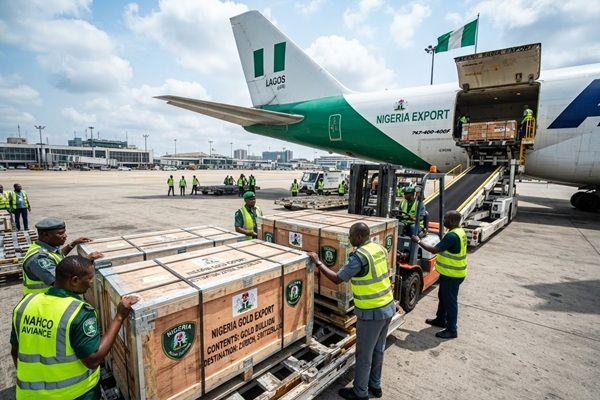
By Maryanne Opene
Nigeria’s ambition to build a stronger mining industry is running into a problem that money, mineral deposits and investment agreements alone cannot solve: the security of the people and businesses operating on the ground.
In Zamfara State, where gold deposits have attracted generations of artisanal miners and traders, armed groups are reportedly demanding levies from mining operators and seeking to control mineral-rich areas. The development threatens livelihoods, disrupts legitimate economic activity and exposes the risks facing investors looking beyond Nigeria’s oil industry for opportunities in the solid minerals sector.
A report by SBM Intelligence covering security and political developments between October 2 and 8, published in a report shared with the press on October 19, identified the growing pressure on gold miners as a concern for the region’s economic activity. The situation illustrates the difficult environment in which Nigeria is attempting to turn its mineral wealth into a reliable source of public revenue, jobs and private investment.
For mining companies, security is not simply an operational consideration. It influences whether a project can attract financing, protect equipment, retain workers and deliver minerals to buyers without unpredictable interruptions. Where armed groups can demand payments or exercise control over mining locations, the cost of doing business becomes harder to calculate.
Unlike ordinary taxes, regulatory fees or agreed community payments, levies imposed under the threat of violence create no dependable commercial arrangement. They provide no assurance of safety, lawful access or continuity of operations. Companies may face pressure to suspend activities, redirect resources towards security or abandon projects that would otherwise be commercially viable.
These risks are particularly significant for investors committing substantial capital to exploration, equipment and processing facilities. Mining projects often require long periods of investment before they begin generating returns. An investor assessing a Nigerian gold project must therefore consider not only the quality of the deposit and the expected market price, but also whether the operation can remain accessible and productive over time.
Nigeria has already experienced the consequences of insecurity in Zamfara’s mining industry. In 2019, the government suspended mining exploration in the state amid security concerns. The restriction was lifted in December 2024 following an improvement in security, although illegal mining continued to pose a challenge. The experience demonstrates how instability can interrupt formal economic activity without necessarily eliminating the demand for the minerals beneath the ground.
When legitimate operations are disrupted, informal networks may continue extracting and trading gold outside effective government oversight. The result is a damaging imbalance: the country retains its mineral resources, but the economic benefits associated with regulated production become more difficult to capture.
This creates a revenue problem for governments at both federal and state levels. Properly regulated mining can generate royalties, licence fees, taxes and employment-related income while supporting businesses that provide transportation, equipment, maintenance and processing services. When production and sales move through informal channels, authorities face greater difficulty establishing how much gold is extracted, who owns it, where it is sold and what revenue should be collected.
The scale of Nigeria’s wider mining challenge is already substantial. A report published in May by the Nigeria Extractive Industries Transparency Initiative and the Africa Network for Environment and Economic Justice identified illegal mining, commercial manipulation, corruption and cross-border smuggling among the channels through which the country loses mineral revenue. It also highlighted the limited contribution of mining to the national economy despite Nigeria’s extensive mineral endowment.
Security pressures can deepen these weaknesses by making formal operations less attractive while leaving informal traders with opportunities to profit from mineral extraction. Where the authorities cannot consistently protect mining sites and transport routes, even businesses willing to obtain the necessary licences may struggle to compete with operators who avoid regulatory costs.
The consequences extend beyond government revenue. Gold mining supports livelihoods in communities where formal employment opportunities may be limited. Small-scale miners, traders, transporters and other service providers depend on the ability to work and move goods safely. When armed groups impose payments or restrict access to mineral-rich areas, the financial burden can spread throughout the local economy.
However, the answer cannot rest on security operations alone. A sustainable mining industry also requires clear regulations, credible licensing arrangements, transparent mineral trading and stronger cooperation between government agencies and legitimate operators. If legal miners encounter confusing procedures, inconsistent enforcement and high operating costs, the incentives to remain within the formal economy may weaken.
Nigeria's recent efforts to attract foreign investment into the solid minerals sector underline what is at stake. In September 2026, Nigeria and the United States signed a framework agreement intended to deepen cooperation in geological data, mineral exploration, development, processing and infrastructure. The agreement reflects Nigeria's desire to attract capital and technical expertise while developing more value from its mineral resources locally.
Yet agreements signed in international capitals can only deliver results when investors can operate safely at home. Geological information may identify a commercially attractive deposit, and financial incentives may improve a project's expected returns, but neither can compensate indefinitely for the risk of armed interference.
The opportunity is considerable if Nigeria can establish the conditions for responsible investment. Gold production can support formal employment, improve export earnings and create demand for local suppliers. Investment in refining and processing could also allow the country to retain more economic value instead of depending mainly on the sale of unprocessed minerals.
Achieving those outcomes will require a system that makes lawful production more attractive and illicit activity more difficult. That includes effective protection for mining corridors, intelligence-led action against armed groups, enforcement against illegal mineral trading and better traceability from extraction to final sale. Authorities must also ensure that enforcement is transparent and that legitimate miners are not treated as criminals simply because they operate in areas where illegal activity is widespread.
For investors, the central question is no longer simply whether Nigeria has gold. The country’s mineral potential is not in doubt. The more pressing question is whether the institutions responsible for protecting investments, enforcing regulations and securing mineral supply chains can provide the reliability that commercial operations require.
Nigeria wants the solid minerals industry to help reduce its dependence on oil revenue. But diversification requires more than identifying new commodities to export. It requires building industries capable of producing consistently, attracting long-term capital and delivering measurable benefits to the wider economy.
The gold deposits of Zamfara will not automatically translate into prosperity. Until legitimate miners can operate without the threat of armed groups demanding payments, Nigeria risks allowing insecurity to undermine an industry that could help broaden its economic future.

Administrator contributes reporting and analysis on government for Brandish.
Keep Reading

Burkina Faso rewrites 33-year-old law to protect strategic state enterprises from privatization

Nearly 21 months after leaving ECOWAS, breakaway Sahel states agree to negotiate new deal with West African bloc

$242m Petroleum Products Diversion Claim: UBA Secures Court Order Against Vitol, Four Others:

Africa’s recycling industry opens new business opportunities for entrepreneurs and investors

Nigeria and India target $15 billion trade revival as Modi seeks renewed crude oil purchases

No comments yet — be the first to comment.