

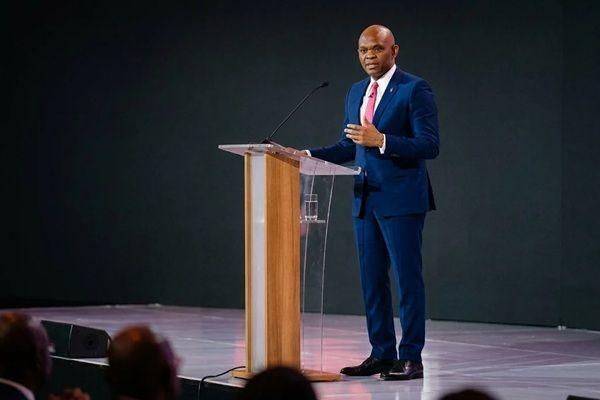
“European private capital is not afraid of Africa. It is afraid of being first and alone. That is the job of public finance and guarantees: take the first risk, so that private capital can follow. And then invest through African institutions, not around them,”At the recently held Europe Africa dialogue tagged, Castelfalfi Dialogues 2026, the Europe–Africa Strategic Dialogue Forum, Tony Elumelu took his gospel of Africapitalism to another global stage, in his continued showcase of the opportunities in Africa, especially the part where Africa would take the lead in the formation of the capital needed for her development.
He delivered the keynote. He didn’t allow the moment to be frittered by grandstanding. On such a global stage, there is usually no time to adjust from what should have been said to what should be said.
Those who knew Tony Elumelu in his early days as an entrepreneur would be shocked at the radical transformation. Tony was the type that appeared shy and spoke very little. He was never one to face jovial journalists at a press conference. You would never find Tony standing and speaking into the microphone.
Back then, he had two media-faces – those who were at ease when reporters need information on what was happening in his legacy Standard Trust Bank. The men were Charls Nwodo and Lanre Adanijo. It was never Tony, who was busy chasing the next balance sheet-changing deal.
Tony has transformed.
Anybody who understands how tony is able to transform the businesses he touches should first look at the man himself and how much he has changes himself, first from a taciturn chief executive to one who confidently engages the audience no matter the dynamics, then from a financial services operator to a hospitality success story and then to an oil & gas champion.
Africa appears to be the next target in his endless self-imposed transformation agenda. From his Tony Elumelu Foundation, where he doles out millions of dollars annually to African startups, to his Africapitalism evangelism which seeks to evolve an inward thinking by Africans to mobilise funds to develop the continent, Tony is determined to bring change to happen upon Africa from within.
Elumelu has been unpretentious about his humble origins of late, increasingly speaking openly about the modest business his mother operated by which he and his siblings were trained. At this forum in Tuscany, he also boldly spoke about his African origins.
“I am an African and a globalist,” his voice echoed through the hall. I have built businesses that not only span Africa but operate in Europe, the United States and the Gulf. I know how closely related we all are – how our futures are tied.
The briefing paper he got to enable him prepare his presentation was predetermined for an expected outcome. It stated that “Europe and Africa have complementary strengths: Africa the resources, Europe the capital, technology and markets.”
Although Elumelu agreed this was true, he did not mince words in telling the gathering that Africa has never benefited from the arrangement
“True,” he said. “It was also true in 1960 and in 1890, and Africa has yet to fundamentally benefit from this “complementarity.”
He became quite blunt.
‘We will not be Europe's raw-material diversification strategy. Europe lost Russian gas and has seen disruption in the Gulf. I understand that. But the Europe–Africa relationship cannot continue to be one of extractive dependency, with Africa as the reliable supplier of raw materials and little or no value created on the African continent.”
Elumelu boldly spoke of a beneficial intersection of supply chain and value chain and made a statement for Africa to move to the points where value is created, rather than be content with being the source the value that is created elsewhere.
“The difference between a supply chain and a value chain is where the value is created – and value must be created in Africa. For the first time, Europe's security interest and Africa's industrial interest point the same way. Let us not waste it.”
Tony identified some fields where value should be created to mutualise the relationship between Africa and Europe.
He first pointed to gas as one important area of these areas. Gas, he said is scandalously being flared in Nigeria, and he enjoined Europe to not only buy the LNG from Nigeria but to co-invest in the harvesting and processing of gas, establishment of fertilizer plants, production of petrochemicals and the establishment of gas-fired industrial parks.
He then spoke about power. He said that the constraint to industrial development against Africa is in electricity.
“Six hundred and fifty million Africans have none. No one builds a smelter or a data centre where the grid fails. European grid and renewables technology, deployed with African operators who know how to deliver, is the most bankable thing on this agenda” to create value in Africa, he said.
He also pointed to critical minerals as third factor. Elumelu became blunt, almost sounding angry: “Lithium, cobalt, graphite, manganese, rare earths. Africa has them. Europe needs them. the Democratic Republic of Congo produces seventy per cent of the world's cobalt and captures almost none of the value, because the refining happens elsewhere. If Europe wants a secure supply of battery materials that is not routed through a single competitor, the only durable way to get it is to put the refineries in Africa, with African equity and real African partners.”
A fourth factor that struck Elumelu as important in mutulising the Europe-Africa relationship is, according to him, human capital.
Human capital, he identified, is Africa's greatest asset. He lamented that Africa’s biggest waste is not in material losses, but in the in the waste of young talent, who are forced by economic and social circumstances to migrate at great personal cost, and at great cost to Africa's future.
‘My foundation, the Tony Elumelu Foundation, is the largest supporter of young African entrepreneurs. In fifteen years, we have funded more than 24,000 young entrepreneurs across all 54 African countries, with more than US$120 million in seed capital. Each year we receive applications from hundreds of thousands. We now work with the EU, the UNDP, the ICRC and more, and we are looking for more partners,” he revealed.
Elumelu then posed a rhetorical question: Can value be generated from Africa at scale? He answered the question by pointing to Aliko Dangote, whom he said built the largest single-train refinery in the world, in Lagos.
“Aliko Dangote,” he said, “built the largest single-train refinery in the world in Lagos, with African capital, against the advice of almost every expert, and Nigeria now exports refined products to Europe instead of importing them.”
This, he believes is a model to be replicated across sectors and industries.
He debunked the fallacy of capital from Europe being afraid of investing in Africa and said what is happening is that European capital is scared of making the first move.
“European private capital is not afraid of Africa. It is afraid of being first and alone. That is the job of public finance and guarantees: take the first risk, so that private capital can follow. And then invest through African institutions, not around them,” he explained.
Again he had an example in the hall, in the person of Benedict Oramah of Afreximbank.
Under Oramah’s leadership, Afreximbank, Elumelu recalled, became a fifty-billion-dollar institution that financed African enterprises and trade when nobody else would, and it did so with African shareholders.
“That is what an African institution at scale looks like, and there are others: African institutions like the African Finance Corporation (AFC) which I co-founded, United Bank for Africa – UBA which I chaired, African insurers and African funds with the balance sheets and the local knowledge to deploy,” Elumelu advised.
When European money arrives with its own intermediaries, its own law and its own arbitration seat, the project may get built, but the capability does not stay.
In conclusion, Elumelu told the gathering, “You need our energy and minerals. We need your capital and technology. Neither of us needs the other's charity. Build value chains that leave the refining, the processing and the equity in Africa, and Europe gets the only supply security that lasts: a supplier that is also prospering. If we do not, Africa will build them with someone else, and Europe will have been offered the chance first. I would rather we built them together.”
.

Administrator contributes reporting and analysis on leadership for Brandish.
Keep Reading
Three sectors in Africa that could deliver long-term profitable investment opportunities

Beyond the showcase: is Enugu getting the governance it deserves?

Is Atiku Abubakar Nigeria’s Raila Odinga?
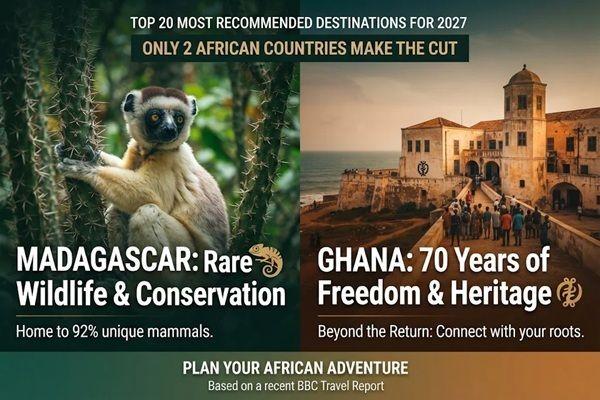
Only Ghana and Madagascr make it to the list of the top 20 most recommended destinations for tourists to visit next year in a new report

Strive Masiyiwa’s Cassava Technologies partners with Mauritius Telecom to expand AI services across Africa
No comments yet — be the first to comment.