

By Maryanne Opene
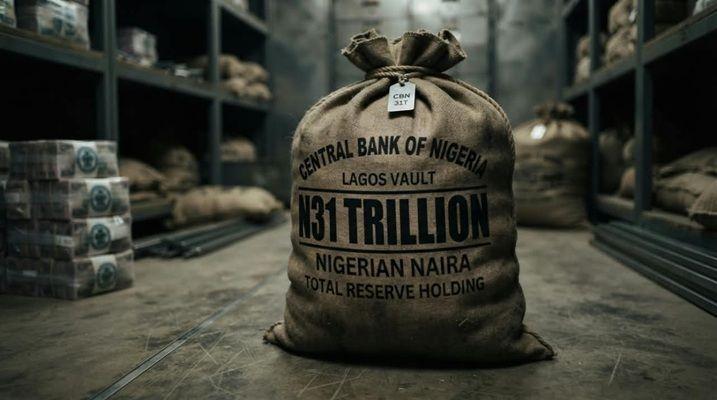
Nigeria has a money problem, but perhaps not in the way many people think. The country is struggling to fund infrastructure, provide affordable housing, improve electricity supply and create the conditions businesses need to grow. Governments continue to search for financing, borrowing remains a major policy option, and communities wait for projects that could improve their lives. Yet Nigeria's pension industry has accumulated more than ₦31 trillion in assets.
That figure should make Nigerians pause and ask a difficult question: if the country has accumulated so much money in long-term savings, why does financing development remain such a persistent challenge?
The answer is not as simple as suggesting that the money is sitting untouched in bank accounts. Pension assets are invested, with significant portions placed in government securities and other financial instruments. These investments serve an important purpose by generating returns and helping pension fund managers meet their obligations to contributors and retirees.
Still, the size of the pension pool presents an opportunity that Nigeria cannot afford to overlook. The country has billions of naira tied up in an investment system that could potentially do more to support productive economic activity, provided the right projects and safeguards are in place.
Consider the country's infrastructure needs. Roads connecting farmers to markets remain inadequate in many communities. Businesses struggle with electricity costs, while transport expenses make it more difficult to move goods across the country. In major cities, the cost of housing continues to rise beyond what many working Nigerians can comfortably afford.
These are not merely inconveniences. They are economic obstacles that affect productivity, employment, household income and the cost of doing business.
- A manufacturer forced to spend heavily on alternative electricity has less money available to expand operations or employ additional workers. A farmer who cannot transport produce efficiently risks losing part of a harvest before it reaches the market. A young worker who spends an unreasonable portion of monthly income on rent has less money available for savings, investment and other essential needs.
Nigeria's development challenges are interconnected, and solving them requires substantial, sustained investment. This is where the country's pension assets deserve closer attention.
Unlike money that governments must raise through annual budgets, pension contributions accumulate over time. That long-term character could make some pension assets suitable for carefully selected projects that require years to mature and generate returns.
A professionally managed power project, for instance, could generate income through electricity sales. A commercially viable toll road could earn revenue from users, while a well-planned housing development could generate returns through rental income or property sales. With appropriate financing arrangements, investments in such projects could potentially benefit pension contributors while supporting wider economic development.
But Nigeria must be careful not to confuse a promising opportunity with a guaranteed solution.
The fact that a country needs roads does not mean every road project is a good investment. The fact that millions of Nigerians need housing does not mean every property development will generate adequate returns. And the fact that electricity is essential to economic growth does not automatically make every proposed power project financially viable.
Demand is only one part of the equation. Projects also require competent management, transparent contracts, realistic cost estimates, reliable revenue arrangements and protection against avoidable risks.
Unfortunately, Nigeria has a long history of development projects affected by delays, abandoned construction, disputed contracts and cost overruns. Public confidence is also weakened when projects are announced with great enthusiasm but deliver less than expected.
These realities explain why pension fund managers cannot simply be instructed to redirect large amounts of money into infrastructure. Their responsibility is to protect the savings of workers who may depend on those investments decades from now.
- A failed public project may become another political controversy, but a failed pension investment could affect the financial future of ordinary contributors. The consequences must therefore be taken seriously.
This is precisely why the conversation should move beyond demanding that pension funds finance more infrastructure. Nigeria must first make its infrastructure projects attractive enough to qualify for responsible long-term investment.
Governments need to improve project preparation, strengthen procurement processes and provide credible information about costs, risks and expected returns. Investors must be able to assess whether a project can generate sufficient income and whether the contractual arrangements are enforceable.
There must also be clear accountability for how money is spent. Pension fund managers should not be pressured to support projects because of political considerations, nor should infrastructure investment become another route through which public resources are exposed to waste.
One practical approach is to expand the use of professionally managed infrastructure funds and properly structured project bonds. Rather than requiring pension funds to finance individual projects directly, these arrangements can provide access to diversified investments, subject to applicable regulations and appropriate risk controls.
Public-private partnerships may also help, but only when responsibilities, revenue arrangements and risks are clearly defined. A partnership is not automatically successful simply because a private investor is involved. Poorly negotiated agreements can leave governments, investors or ordinary citizens carrying costs they cannot reasonably afford.
Housing deserves particular attention. Nigeria's urban population continues to place pressure on accommodation, yet the gap between construction costs and household purchasing power remains a major obstacle. Pension-backed housing investments could support the development of rental properties and other commercially sustainable housing options, but affordability must be part of the design.

Administrator contributes reporting and analysis on money for Brandish.
Keep Reading

Nigeria receives billions from its diaspora, but how much becomes productive investment?

JPMorgan deposits N50bn with the Central Bank of Nigeria as American number one bank perfects move for its Nigerian license

Nigeria has Africa's richest man, so why is it still struggling to become a manufacturing powerhouse?

Kenya's mobile money success holds important lessons for Nigeria's fintech industry

Nigeria’s $1.19bn food import bill exposes the business cost of weak local production

No comments yet — be the first to comment.