

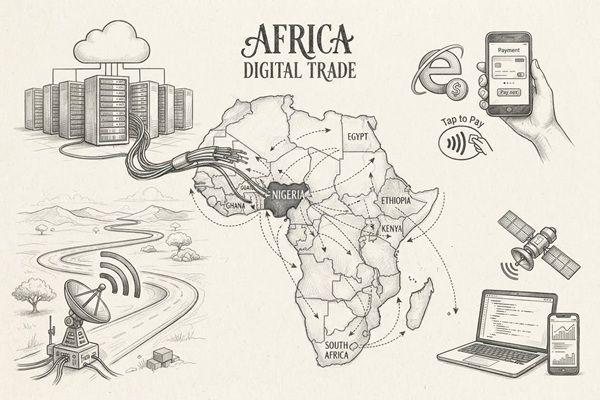
As part of preparations, officials have engaged regulators from the six countries, including central banks and trade ministries, to examine the challenges businesses encounter when operating across national borders.
Nigeria is working towards a digital trade pact with five African economies, a move expected to open additional regional opportunities for local technology companies and businesses providing digital services.
The agreement is expected to bring Nigeria together with Ghana, Rwanda, Kenya, South Africa and Egypt, with the signing scheduled to take place this month during a meeting of the African Continental Free Trade Area (AfCFTA) Council of Ministers in Zimbabwe.
Minister of Industry, Trade and Investment Jumoke Oduwole announced the planned arrangement, noting that the countries were identified based on the markets Nigerian digital businesses have expressed interest in accessing.
The proposed partnership is part of the Federal Government’s efforts to strengthen Nigeria’s participation in Africa’s expanding digital economy and create more room for homegrown companies to grow beyond the domestic market.
As part of preparations, officials have engaged regulators from the six countries, including central banks and trade ministries, to examine the challenges businesses encounter when operating across national borders.
The discussions are expected to promote closer regulatory engagement and explore ways to ease obstacles confronting digital companies seeking to establish a presence in other participating economies.
While the agreement is expected to improve cooperation, its detailed provisions have not been made public. The extent to which it may affect licensing procedures, taxation, capital requirements or other operating conditions remains unclear.
The proposed pact comes as Nigeria continues to pursue opportunities under the AfCFTA, which provides a framework for expanding trade among African economies. Digital commerce and technology-based services are increasingly relevant to this effort, particularly as businesses look beyond their home markets for new sources of revenue.
For Nigerian fintech operators and other digital-service providers, entering foreign markets can involve dealing with different supervisory authorities, regulatory processes and compliance obligations. A coordinated approach among participating countries could help businesses navigate some of these complexities.
The government is also seeking to encourage Nigerian development institutions to increase their investment activities across the continent, with the aim of supporting companies pursuing regional expansion.
Oduwole said the ministry was assisting Nigerian businesses with requirements for accessing foreign markets, including product standards and rules of origin. Such requirements can determine whether goods qualify for preferential treatment under trade arrangements.
The planned agreement is expected to contribute to wider efforts to strengthen digital trade cooperation in Africa. However, the six-country initiative should be distinguished from the broader AfCFTA digital trade framework, as the specific scope and commitments of the proposed pact have yet to be disclosed.
The commercial benefits will ultimately depend on the provisions adopted by the participating governments and how effectively they are implemented.
For Nigerian businesses, a clearer and more coordinated operating environment could improve the prospects of reaching customers in other African markets. Nevertheless, companies will remain subject to relevant national laws and regulatory requirements.
The planned pact signals Nigeria’s interest in using regional cooperation to support the growth of its digital businesses. Its significance will become clearer after the agreement is formally signed and the details of its implementation are released.

Administrator contributes reporting and analysis on technology for Brandish.
Keep Reading
AI nationalism: Nvidia, Open AI and Anthropic to be named AI national champions by Trump to help them sell abroad, WSJ reports

South Korea to double down on bespectacled students after discovering examination cheating with the use of AI glasses
Nigerian Bbanks slash loan impairment charges by 47% to ₦1.01trn after costly bad debt clean-up

Has Tinubu turned Nigeria into a cappuccino economy? When the economy looks attractive from the top but leaves millions struggling at the bottom

Beyond the showcase: is Enugu getting the governance it deserves?

No comments yet — be the first to comment.