


For decades, Nigeria’s petrol business operated around a familiar pattern. Crude oil was produced locally, refined petroleum products were imported in large volumes, marketers moved the products across the country, and consumers ultimately carried the cost of a system heavily dependent on foreign supply. That model is now facing one of its biggest challenges.
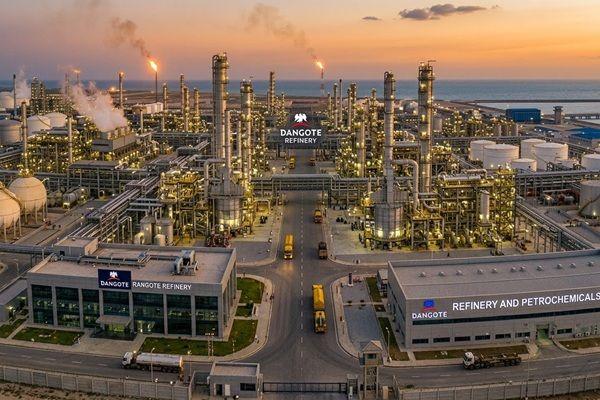
At the centre of the disruption is the Dangote Petroleum Refinery, whose decision to stop selling petrol to major marketers that continue to import the product has opened a fresh chapter in Nigeria’s downstream petroleum industry.
The decision is more than a commercial disagreement between a refinery and fuel marketers. It reflects a deeper struggle over how Nigeria’s petrol market should operate now that the country has a refinery capable of supplying substantial volumes of locally refined products.
Dangote’s position is built around the quality and identity of its petrol. The refinery has accused some marketers of purchasing its petrol and subsequently mixing it with imported grades before distributing the products into the market.
For the refinery, the concern is straightforward: after investing heavily in producing high-quality petrol, it does not want its product associated with fuel whose quality it cannot control after leaving its facility. The refinery has argued that blending its products with imported fuel could make it difficult for consumers and regulators to distinguish between products supplied directly from the plant and those altered further along the distribution chain.
But the marketers see the situation differently.
Some have interpreted the restriction as an attempt to weaken petrol imports and strengthen Dangote’s position in the domestic market. Their argument is that marketers should be able to source products from different suppliers based on price, availability and business considerations.
That disagreement exposes the larger issue confronting Nigeria’s downstream sector: what should competition look like in a market where domestic refining capacity is expanding but government-approved fuel imports remain part of the supply system?
The answer is becoming increasingly important because the economics of imported petrol are changing.
- Nigeria spent about N952.15bn on imported petrol in the second quarter of 2026, according to trade data. Although that figure represented a significant decline from the same period a year earlier, it was almost eleven times the value recorded in the first quarter of 2026. At the same time, Nigeria exported more than N546bn worth of petrol during the quarter, creating an unusual situation in which the country was simultaneously importing and exporting the same broad category of refined petroleum products.
That contradiction captures the complexity of Nigeria’s emerging fuel market.
The country is no longer simply an oil-producing nation dependent on imported petrol. It is increasingly becoming a refining and exporting market as well. Dangote has already supplied products to domestic consumers while also expanding its presence in international markets.
Yet domestic competition remains complicated.
Imported petrol accounted for about 43 per cent of petrol supplied into Nigeria in July, according to figures previously cited by the refinery. Dangote has argued that continued imports make production planning more difficult because the refinery cannot accurately predict how much of the domestic market will be available for its products.
For a refinery operating on an enormous scale, that uncertainty matters.
Producing fuel is not simply a matter of switching machinery on and off whenever demand changes. Refining requires crude supply arrangements, storage planning, transportation, inventory management and significant capital expenditure. If large quantities of competing imported petrol arrive unexpectedly, locally refined products may have to compete for limited storage and distribution space.
This is where Dangote’s latest decision becomes significant.
Rather than simply complaining about imported petrol, the refinery is changing the terms on which it does business with some marketers. The strategy effectively separates marketers into those buying from the refinery without simultaneously importing competing petrol and those that remain active participants in the import market.
The development could therefore accelerate the emergence of two competing supply channels: one built increasingly around domestic refining and another maintained through international fuel imports.
For consumers, however, the question is not necessarily which side wins.
The real question is whether the new structure will produce more reliable supply and better prices.
Competition remains important because a dominant domestic supplier, however large its investment, still operates in a market where consumers ultimately need affordable and consistently available petrol. Imports can provide an alternative source of supply when domestic production is insufficient, while local refineries can reduce exposure to international shipping costs, foreign exchange pressures and overseas supply disruptions.
The challenge for regulators will be finding the balance.
If imports remain necessary, they must meet clearly enforced quality standards and compete fairly with locally refined products. If domestic refineries can adequately supply the market, regulators must also ensure that policies do not unnecessarily undermine local investment.
The dispute over blending adds another layer to that responsibility.
Rather than allowing competing claims about fuel quality to dominate the market, the industry needs transparent testing, certification and traceability mechanisms capable of establishing exactly what product enters the country, who supplied it and whether it meets the required specifications.
That would move the debate away from accusations and towards measurable standards.
Dangote’s move also signals something bigger about Nigerian business.
For years, many of the country’s largest fortunes were built around importing, distributing and trading products that Nigeria had the raw materials or potential to produce domestically. The rise of large-scale local refining challenges that structure.
The refinery is not merely selling petrol. It is attempting to change where value is created in the petroleum chain.
If crude is produced in Nigeria, refined in Nigeria, transported by Nigerian businesses and sold to Nigerian consumers, a greater portion of the economic activity remains within the domestic economy. That has implications for jobs, logistics, industrial development, foreign exchange demand and the wider business ecosystem.
But that transformation will not happen simply because a massive refinery exists.
It will depend on whether Nigeria can build a downstream market where local production, legitimate imports, independent marketers and consumers operate under transparent rules.
Dangote’s petrol sales restriction has therefore become bigger than a disagreement over who buys fuel from whom.
It is a test of Nigeria’s transition from a country that primarily produces crude oil to one capable of refining, distributing and exporting substantial volumes of finished petroleum products.
The old fuel business model was built around scarcity, imports and dependence.
The emerging model is being built around domestic refining, scale and competition.
How that transition is managed could determine not only the future of petrol prices, but also the direction of Nigeria’s entire downstream petroleum industry.

Administrator contributes reporting and analysis on energy for Brandish.
Keep Reading

Nigeria and India target $15 billion trade revival as Modi seeks renewed crude oil purchases

Aliko Dangote plans Africa fuel network across East, Central and Southern Africa in $50 billion expansion

Dangote acquires 25% stake in Kenya pipeline company, deepens East African energy push
Dangote’s ₦5,250 investment opportunity: the billions behind small investors’ money

Africa’s recycling industry opens new business opportunities for entrepreneurs and investors

No comments yet — be the first to comment.