

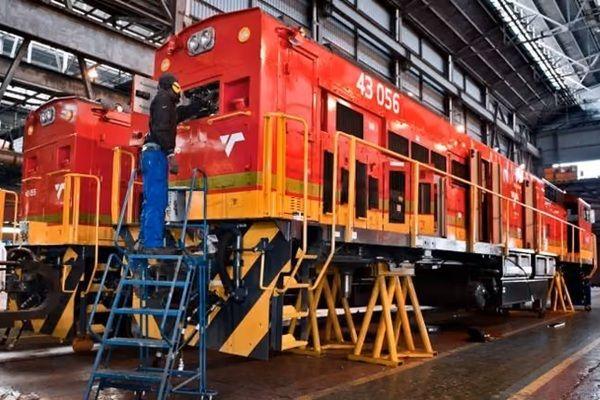
Transnet Engineering signed a locomotive-support agreement with Wabtec on 15 October. The ten-year contract is worth approximately $400 million.
According to Business Insider Africa, it covers components, technical support and maintenance technology for two locomotive classes. The aim is to improve the reliability of trains transporting export commodities, containers and general freight.
The ten-year arrangement covers Transnet’s Class 43D and 44D fleets, which haul export commodities, containers and general freight.
It focuses on maintaining existing locomotives, supplying components and improving technical support rather than buying a new fleet.
The agreement was signed in Koedoespoort on 15 October, bringing a long-term maintenance partnership into Transnet’s wider effort to restore freight performance.
According to a South African Government News Agency report published on 16 October, the agreement aims to improve locomotive availability, reliability and maintenance across important freight routes.
The agreement covers Transnet’s Class 43D and 44D freight locomotives.
Keeping export trains moving
Wabtec will supply components, technical expertise and predictive maintenance capabilities, including its Expert-on-Alert monitoring platform.
The technology is intended to help identify developing problems and support maintenance decisions, reducing the time locomotives spend unavailable for service.
The agreement also includes technical cooperation, knowledge transfer and localisation initiatives intended to strengthen South African rail engineering skills.
Transnet Engineering chief executive Bessie Mabunda said the partnership would support freight recovery and improve the country’s logistics competitiveness. Those are intended benefits; the companies have not yet demonstrated the agreement’s effect on freight volumes
A recovery already under way
The contract comes as Transnet attempts to build on improving rail performance.
The group reported freight volumes of 167.9 million tonnes for the financial year ended March 2026, compared with 160.1 million tonnes a year earlier. Its annual results, released in September, also showed its first annual profit in four years, supported by an asset sale.
For exporters, locomotive availability is a practical constraint. Equipment that cannot operate reliably limits the number of trains available to carry goods, even where customers and cargo are ready.
The new agreement addresses that part of the logistics chain. Its commercial value will depend on whether better access to components and technical support produces more dependable services.
Separate from private rail investment
Wabtec is also involved in a separate South African rail expansion programme.
Earlier, private operator Traxtion committed more than $200 million to expand freight capacity, including the acquisition of 46 former KiwiRail locomotives for upgrading with Wabtec.
That programme concerns a private operator’s fleet expansion. The newly signed agreement supports locomotives already operated by Transnet.
Together, the transactions illustrate two different parts of South Africa’s rail recovery: expanding participation by private operators and improving the performance of the state-owned fleet.

Administrator contributes reporting and analysis on energy for Brandish.
Keep Reading
Court eases way through for Dangote to commence construction of his refinery in Lamu, Kenya
At lighting expo, stakeholders say reliable, affordable energy are of both economic and social importance

No Nigerian company makes the 10 highest-ranked African companies on Forbes’ World’s Best Employers 2026 list, as South Africa continues to dominate

After nearly 40 years, KFC abandons Pepsi for Coca-Cola in the US, but its 1,500-plus African outlets are left out of the deal
Dangote plans to offer at least 10% of his Ethiopian fertiliser business to investors through stock market listing

No comments yet — be the first to comment.