

Nigeria under the APC: the cost of governance without the people at Heart
By Nze David N. Ugwu
There is an African proverb that says, “No thief drives a stolen car gently.” It is a simple but powerful observation about human behavior. A person who steals a vehicle knows that he does not own it, has no legitimate claim to it, and may be forced to abandon it at any moment. He therefore has little incentive to preserve its engine, protect its bodywork, or worry about the damage he causes while driving it. His immediate concern is to get as much use out of the vehicle as possible before the owner or the law catches up with him.
The proverb is not merely about theft. It is about responsibility, ownership, accountability, and the attitude of those who exercise power over something they do not genuinely respect.
Applied to Nigeria's political circumstances, it raises an uncomfortable question: does the manner in which the All Progressives Congress (APC) government has managed the country reflect the attitude of a leadership that considers itself accountable to the people, or that of a driver who behaves as though he has nothing to lose?
To be clear, this is a political metaphor, not a judicial finding that the APC stole an election. Whether the 2023 presidential election was fairly won remains a matter of political dispute, and the legitimacy of an electoral victory must ultimately be assessed through evidence and the applicable constitutional and legal processes. Nevertheless, a government that claims a popular mandate has a fundamental obligation to demonstrate, through its performance, that it deserves the confidence of the people.
Unfortunately, the combination of economic hardship, persistent insecurity, declining purchasing power, and widespread public frustration has placed the APC government under intense scrutiny. For millions of Nigerians, the promise of renewed hope has become a painful question about the meaning of democracy when ordinary citizens struggle to afford the necessities of life.
The central issue is not simply whether the government possesses the constitutional authority to govern. It is whether it has exercised that authority with sufficient prudence, compassion, and accountability to justify the sacrifices it has demanded of Nigerians.
The 2023 Mandate and the Burden of Proof
Elections confer political authority, but they do not confer unlimited moral license. Winning an election is the beginning of a government's responsibility, not the conclusion of it.
President Bola Ahmed Tinubu and the APC campaigned on promises of economic transformation, improved security, employment opportunities, and better living conditions. The expression Renewed Hope became the defining slogan of the administration's political message.
For many Nigerians, that message represented an expectation that the country could overcome its economic difficulties and that a new administration would provide the leadership necessary to unlock its enormous potential.
However, a mandate acquired through the ballot box must be sustained through performance. Citizens may disagree about how an election was conducted, but the quality of governance affects everyone, regardless of political affiliation.
If the APC genuinely believes that its electoral victory reflected the will of the Nigerian people, the most effective way to reinforce that claim is to deliver tangible improvements in their lives. Affordable food, reliable electricity, decent healthcare, employment opportunities, safer communities, and a more stable economy would provide stronger evidence of democratic legitimacy than political declarations or repeated appeals for patience.
Indeed, a government that delivers on its promises gradually wins over even some of its fiercest critics. Conversely, an administration that presides over worsening living conditions risks alienating the very citizens whose votes, whether enthusiastic or reluctant, placed it in power.
This is where the African proverb becomes relevant. A government that regards its mandate as a temporary political possession rather than a sacred public trust may be tempted to prioritize immediate political survival over the long-term welfare of the nation.
The real test of leadership is whether those in power behave as custodians of the people's commonwealth or as temporary beneficiaries of political office.
Petrol Subsidy Removal: Reform Without Sufficient Protection
One of the defining decisions of the Tinubu administration was the removal of the petrol subsidy, announced during the President's inauguration on May 29, 2023.
The administration defended the decision as necessary to address the fiscal burden associated with subsidizing petrol, reduce opportunities for corruption and inefficiency, and redirect public resources towards more productive uses.
There is a legitimate economic argument for reforming a subsidy system that imposes substantial costs on public finances. Nigeria's longstanding petrol subsidy arrangements generated difficult questions about fiscal sustainability, pricing distortions, distributional fairness, and the opportunity cost of government expenditure.
It would therefore be simplistic to argue that every form of subsidy must be retained indefinitely, regardless of its cost or effectiveness.
But the legitimacy of an economic reform cannot be judged solely by the government's explanation of why it is necessary. It must also be assessed by how the reform is designed, implemented, communicated, and managed to protect vulnerable citizens.
Removing a major price support in an economy where millions depend on petrol-powered transport, generators, and small businesses was always going to have consequences. Transport fares would rise. Distribution costs would increase. Businesses dependent on petrol would face higher operating expenses. These pressures would inevitably feed into the prices of food and other essential commodities.
The question, therefore, was never simply whether subsidy reform was economically defensible. It was whether the government had adequately prepared the country for its immediate consequences.
Could public transport arrangements have been strengthened before the announcement? Could targeted assistance for vulnerable households have been made more effective? Could social protection programs have been expanded and verified before the full effects of the reform reached the population? Could the government have communicated a credible, transparent timetable showing how the savings would translate into measurable public benefits?
These were not peripheral concerns. They were central questions of responsible governance.
For many Nigerians, the immediate experience was that the cost of living rose sharply while income remained largely unchanged. Workers found that their salaries could no longer cover the same household expenses. Small businesses struggled with higher energy and transportation costs. Parents faced mounting difficulty paying school fees, while families reduced the quality and quantity of food they consumed.
The removal of the subsidy may have addressed a longstanding fiscal problem, but it also exposed the weaknesses of a social protection system that was unable to cushion the shock sufficiently for millions of citizens.
A government cannot reasonably demand that citizens endure painful reforms indefinitely without showing them where the sacrifices are leading.
If subsidy savings are being realized, Nigerians deserve transparent accounts of how those resources are being used. They deserve evidence of investments in public transport, healthcare, education, infrastructure, and targeted welfare. They deserve to know how the government measures the benefits of its policies and who is actually receiving them.
Reform without visible accountability creates suspicion. Sacrifice without demonstrable returns breeds resentment.
A responsible driver does not merely insist that a difficult journey is necessary. He explains the destination, prepares for the hazards, and takes reasonable steps to ensure that the passengers arrive safely.
Insecurity: When the State Fails to Protect Its Citizens
Economic hardship is particularly painful when citizens must also live with fear for their lives and property.
Nigeria's security challenges predate the present administration. Insurgency, banditry, kidnapping, communal violence, and other forms of criminality have persisted across different governments. It would be historically inaccurate and politically convenient to attribute the entire security crisis to the APC or to pretend that a change of government could resolve decades of institutional weaknesses overnight.
Nevertheless, the existence of inherited problems does not absolve a government of responsibility for addressing them.
Every administration must be judged by the seriousness of its response, the effectiveness of its strategies, the resources it deploys, and the results it achieves.
For families living in communities threatened by bandits and kidnappers, security is not an abstract policy objective. It is the difference between sleeping peacefully and spending the night in fear. For farmers unable to access their land because of insecurity, it is the difference between earning a livelihood and facing hunger. For parents sending children to school, it is the assurance that education will not expose them to the danger of abduction.
When people are afraid to travel, farm, trade, or attend school, the consequences extend beyond immediate physical danger. Agricultural production suffers, food prices rise, investment becomes more difficult, and entire communities are pushed towards poverty.
Security is therefore both a constitutional responsibility and an economic necessity.
Nigerians are entitled to ask whether security spending is producing measurable improvements, whether intelligence is being effectively utilized, whether criminal networks are being disrupted, and whether communities recovering from attacks are receiving the support they need.
They are also entitled to demand accountability when public officials fail in their responsibilities.
The objective should not be to exploit insecurity for partisan advantage. It should be to insist that the protection of human life must rank among the highest priorities of government.
A government that spends enormous sums on official comfort and political activities while citizens remain exposed to preventable dangers risks sending a disturbing message about its priorities.
The state exists, above all, to protect the lives, rights, and welfare of the people. When that fundamental responsibility is inadequately discharged, public confidence inevitably suffers.
The Unprecedented Burden on Ordinary Nigerians
Perhaps the most troubling feature of Nigeria's current difficulties is the cumulative pressure on household incomes.
Economic hardship rarely arrives in isolation. It comes in layers.
A family that pays more for transport must also contend with higher food prices. A trader who spends more on electricity and fuel may increase prices or reduce staff. A civil servant whose salary has not kept pace with inflation must make difficult decisions about healthcare, school expenses, rent, and food.
For low-income households, there is often little room to adjust. They cannot easily change their means of transportation, purchase expensive alternatives to public services, or protect their savings from inflation. Their choices are frequently reduced to deciding which essential need must be postponed or sacrificed.
This is why economic statistics, though important, cannot tell the whole story.
A government may point to improved revenue, increased foreign exchange inflows, rising investment, or better fiscal indicators. Such developments may represent genuine progress. They should be acknowledged where supported by evidence.
But macroeconomic improvements are not ends in themselves. They must ultimately contribute to greater productivity, improved living standards, and opportunities for ordinary citizens.
If the economy is said to be improving while millions of households remain unable to afford basic necessities, the government must explain how the benefits are being distributed and what further measures will connect national economic performance to household welfare.
Growth that does not generate sufficient employment, rising real incomes, or more affordable essential services will struggle to command public confidence.
Nigerians are not necessarily opposed to sacrifice. They are opposed to a system in which sacrifice appears to be demanded disproportionately from those who have the least capacity to bear it.
They are not necessarily opposed to reform. They want reforms that are fair, transparent, and capable of producing better outcomes.
Above all, they want evidence that the people making difficult decisions understand the consequences those decisions have for ordinary families.
The Contradiction Between Public Sacrifice and Political Comfort
Nothing undermines public confidence more quickly than the perception that political leaders are insulated from the hardships they ask citizens to endure.
When households are cutting meals, struggling with transport fares, and postponing medical treatment, extravagant displays of official privilege become politically and morally difficult to defend.
The issue is not that public officials must live in poverty. Nor is it that government expenditure on security, official transport, or legitimate administrative functions is inherently wasteful.
The issue is proportionality, necessity, and accountability.
Citizens expect leaders to demonstrate restraint during periods of widespread hardship. They expect public resources to be managed carefully, government institutions to operate efficiently, and political officeholders to recognize that their privileges are justified only insofar as they serve legitimate public purposes.
The contrast between the sacrifices demanded of citizens and the apparent comfort enjoyed by some political officeholders fuels the perception that Nigeria operates with different standards for the powerful and the powerless.
That perception can be as damaging as the hardship itself.
Democracy depends not only on institutions and elections but also on public confidence that the system is fundamentally fair. When citizens believe that those in power are protected from the consequences of their own decisions, trust erodes.
The APC government must therefore understand that public confidence cannot be restored by political messaging alone. It requires visible restraint, transparent spending, credible anti-corruption enforcement, and a willingness to subject public decisions to independent scrutiny.
A government that asks its citizens to tighten their belts should be prepared to demonstrate that it is also tightening its own.
The Danger of Governing Without Listening
Another important lesson from the African proverb is that a person who does not feel responsible for a vehicle is unlikely to listen carefully to the warnings of its passengers.
The same danger confronts governments that mistake political authority for public approval.
Democratic leadership requires more than issuing policies and defending them against criticism. It requires listening to citizens, examining evidence, acknowledging mistakes, and making necessary adjustments.
Public protests, labor disputes, criticism from professional associations, complaints by market traders, and expressions of frustration on social media should not automatically be dismissed as the work of political opponents.
Some criticism may indeed be partisan, exaggerated, or poorly informed. But the presence of political motives does not invalidate every concern being expressed.
A responsible government distinguishes between propaganda and legitimate grievances. It investigates complaints, explains its decisions, corrects administrative failures, and adapts policies when evidence shows that the original approach is not delivering the intended results.
The ability to change course is not necessarily a sign of weakness. In public administration, it can be evidence of learning and responsible leadership.
If a policy imposes greater hardship than anticipated, the government should examine how its consequences can be mitigated. If a welfare program fails to reach its intended beneficiaries, the delivery mechanism should be reviewed. If security operations are not producing sufficient results, strategies should be reassessed.
What matters is not whether a government can defend every decision it has made. What matters is whether it can improve the quality of its decisions.
The Nigerian people do not expect perfection. They expect competence, honesty, responsiveness, and demonstrable progress.
Democracy Is More Than Winning Elections
At the heart of this debate is a fundamental misunderstanding that sometimes afflicts political leaders: the belief that winning an election is sufficient justification for everything that follows.
It is not.
Elections establish who is authorized to exercise public power. They do not exempt those who win from scrutiny, nor do they suspend the constitutional obligations of government.
A democracy is sustained by a continuing relationship between leaders and citizens. Citizens grant political authority, while governments are expected to exercise that authority in the public interest.
This relationship is strengthened when people experience improvements in their living conditions, enjoy equal protection under the law, and have meaningful opportunities to hold their leaders accountable.
It weakens when public institutions appear unresponsive, corruption goes unpunished, insecurity persists, and citizens feel that their voices no longer matter.
Whether the APC won the 2023 presidential election fairly remains a question that should be addressed through evidence, lawful procedures, and credible electoral institutions. But the government has a more immediate and practical way to strengthen public confidence in its mandate: govern well.
A government that delivers security, creates economic opportunities, improves public services, and manages national resources transparently gives citizens tangible reasons to believe that their votes mattered.
A government that fails to do so invites questions not only about its competence but also about the political choices that brought it to power.
The most effective defense of an electoral mandate is not an endless argument about how it was obtained. It is the quality of governance that follows.
The Road Ahead: From Renewed Hope to Renewed Confidence
Nigeria's difficulties are serious, but they are not insurmountable. The country possesses substantial human resources, entrepreneurial energy, agricultural potential, and opportunities for industrial and technological development.
What it requires is a more disciplined approach to governance, one that places measurable public outcomes above political convenience.
First, the government must demonstrate clearly how the resources saved through subsidy reform are being deployed. Regular, accessible reports should identify the projects funded, the beneficiaries reached, and the results achieved.
Second, economic policy must place greater emphasis on protecting vulnerable households. Targeted social assistance, improved public transport, support for productive small businesses, and measures that expand employment opportunities should be designed and implemented with urgency.
Third, security must be treated as a national emergency requiring sustained coordination, effective intelligence, professional policing, and accountability for operational failures. Citizens must be able to see credible evidence that the state is progressively reclaiming communities from criminal violence.
Fourth, public expenditure must reflect the seriousness of the economic circumstances. Wasteful spending, unjustified privileges, and opaque procurement practices should be challenged regardless of the political officeholders involved.
Fifth, the government must rebuild trust through honest communication. Citizens are more likely to support difficult reforms when leaders explain the choices involved, acknowledge the costs, publish credible evidence, and demonstrate that the burdens are being shared fairly.
Finally, Nigerians themselves must remain active participants in the democratic process. Citizens should demand accountability, support credible journalism, engage constructively with public institutions, organize peacefully, and use their constitutional rights to insist on better governance.
Political accountability must not end when ballot papers are counted. It must continue throughout the life of every administration.
Conclusion: Who Owns the Car?
The African proverb, “No thief drives a stolen car gently,” is powerful because it forces us to consider the relationship between ownership and responsibility.
But Nigeria's political challenge goes beyond determining whether an election was won fairly. It concerns the attitude with which public power is exercised and the degree to which those entrusted with authority respect the people whose lives their decisions affect.
The APC government may defend its economic reforms as necessary, point to inherited problems, and argue that the benefits of difficult decisions require time to materialize. Some of these arguments may have merit. National transformation is rarely immediate, and no administration can eliminate every structural weakness in a few years.
Yet the need for patience cannot become a permanent excuse for inadequate results. Nor should the language of reform be used to dismiss the suffering of citizens who are struggling to survive.
The government must understand that Nigeria is not its private property. The country's resources do not belong to the ruling party, and the people are not passengers who must remain silent while those in power decide their destination.
Nigeria belongs to its citizens. Public office is a temporary trust, and the authority that accompanies it carries an obligation to protect the national interest, preserve public resources, and improve the welfare of the population.
If the APC believes that its 2023 victory represented the democratic choice of Nigerians, it should have every reason to protect that mandate through exemplary governance. It should seek to make its electoral victory meaningful by delivering the dividends of democracy, especially to citizens who have borne the greatest costs of its policies.
The true test of its leadership will not be the number of times it proclaims its achievements, nor the intensity with which it defends its political legitimacy. It will be whether Nigerians become safer, whether their incomes acquire greater purchasing power, whether their children have better opportunities, and whether the country becomes a fairer place in which to live and work.
The choice is clear: the government can continue to govern defensively, treating public frustration as a political inconvenience, or it can recognize that the national vehicle belongs to the Nigerian people and must be handled with the greatest care.
For the sake of the country, the APC must choose the latter.
No government can indefinitely demand the patience of a suffering population without earning that patience through results. And no political victory, however fiercely defended, can substitute for the enduring legitimacy that comes from good governance.
The question Nigerians must continue to ask is simple: if this is our country, why should we continue to feel as though we are merely passengers in a vehicle whose driver does not care where it ends up?
The answer will be determined not by political slogans, but by what the government does next.
Nze David N. Ugwu is the Managing Consultant of Knowledge Research Consult. He could be reached at knowledgeresearch2003@gmail.com or +2348037269333.

Administrator contributes reporting and analysis on leadership for Brandish.
Keep Reading
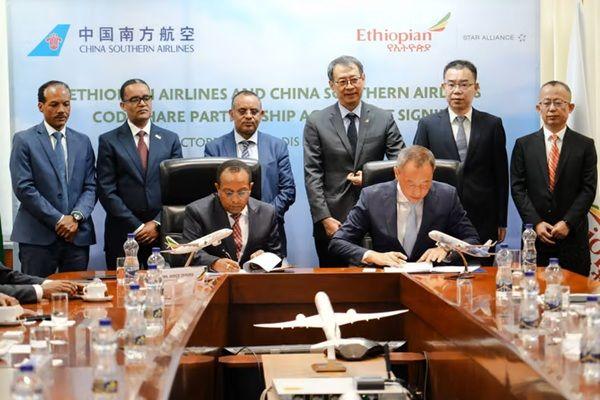
Ethiopian Airways, Africa's biggest airline, and China Southern Airlines, sign deal to widen travel connections as the Chinese airline enters Ethiopia
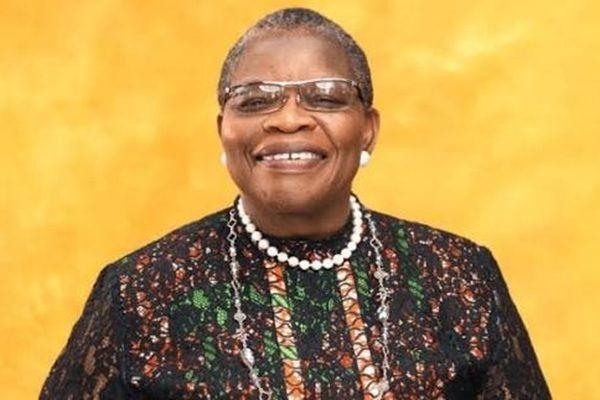
Ezekwesili calls on African nations to stop depending on foreign aid for healthcare
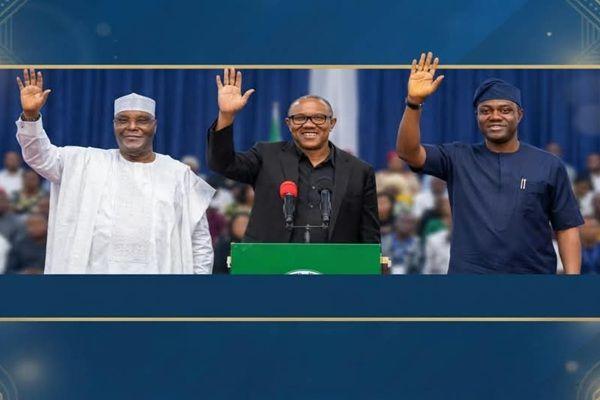
Nigeria’s opposition is talking unity again, but can Atiku, Obi and Makinde agree on 2027?

Real Madrid say Nazi comparison unacceptable demand La Liga president’s resignation
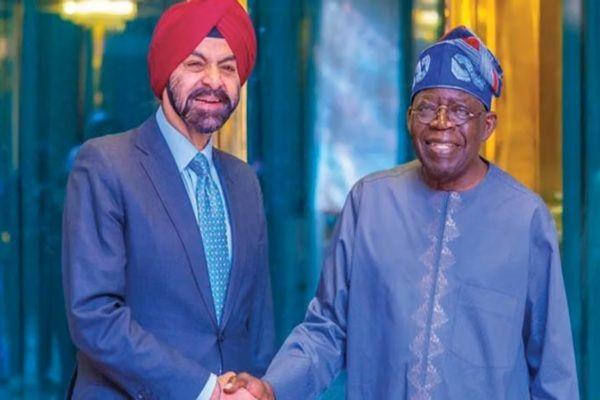
World Bank mobilises $5.79bn for investment in Nigeria, agric, telecom and SMEs as Dangote, Indorama get funds to boost fertilizer production

No comments yet — be the first to comment.