

By Maryanne Opene
Nigeria’s opposition has a problem that goes beyond defeating an incumbent president. It must find a way to bring competing political ambitions under one arrangement without leaving the people involved with little incentive to support it.
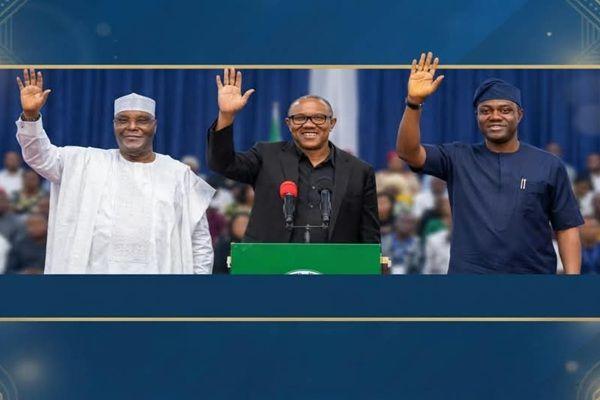
That challenge is returning to the centre of preparations for the 2027 general election following consultations between six opposition parties and five presidential candidates, including former Vice President Atiku Abubakar, Peter Obi and Oyo State Governor Seyi Makinde.
The consultations, reported on October 14, involve the African Democratic Congress (ADC), Allied Peoples Movement (APM), Nigeria Democratic Congress (NDC), Social Democratic Party (SDP), Peoples Democratic Party (PDP) and Peoples Redemption Party (PRP).
According to a statement issued by Salihu Moh. Lukman on behalf of the participating parties, the meetings followed resolutions reached at the G100 Opposition Summit, which called for sustained dialogue and stronger cooperation among opposition groups.
The other candidates involved are Adewole Adebayo and former Cross River State Governor Donald Duke. The discussions are continuing, and no final agreement on a common presidential candidate has been announced.
For Brandish readers, the important question is not simply whether these politicians can meet. It is whether they can agree on a political structure that gives each participating party a reason to remain committed while offering voters a credible alternative.
The cost of agreeing on one candidate
Atiku, Obi and Makinde bring different political identities and constituencies to the discussions. Their involvement gives the consultations visibility, but it also illustrates the difficulty of building a shared platform around politicians with their own ambitions and established supporters.
A coalition must answer a difficult question: who gets to lead?
If the discussions eventually produce a single presidential candidate, the participating parties will have to agree on a selection process that their members consider legitimate. They will also need to determine what happens to the ambitions of candidates who do not emerge as the coalition's choice.
The negotiations would involve more than the personalities at the top. Party officials, campaign organisations, political supporters and other stakeholders would all have interests in the outcome.
A poorly managed process could create resentment among groups expected to surrender their individual platforms. An arrangement that offers no credible way to resolve disagreements could struggle to maintain unity when electoral pressures increase.
These are practical questions rather than evidence that the consultations will fail. However, they explain why a series of meetings, even involving prominent political figures, cannot by itself establish a functioning coalition.
The 2023 election left a difficult question unanswered
The previous presidential election remains an important reference point for discussions about opposition cooperation.
In 2023, Tinubu contested under the All Progressives Congress, Atiku under the PDP and Obi under the Labour Party. The candidates attracted support through separate political platforms, and the election result renewed debate about the consequences of a divided opposition.
That experience has helped sustain interest in a common candidate or a coordinated electoral strategy.
Yet the circumstances surrounding the 2027 election are not identical to those of 2023. Political affiliations, candidate selections and party structures have their own histories, and any proposed alliance must account for the realities of the current contest.
The challenge is to establish whether cooperation can extend beyond a shared interest in challenging the ruling party.
A lasting arrangement would need agreed priorities, a clear decision-making process and a credible explanation of how participating parties intend to work together. Without these elements, coalition discussions risk remaining an exercise in political consultation rather than producing a structure capable of operating throughout an election campaign.
Why the negotiations matter to businesses
Political alliances are usually examined through the language of elections, personalities and party competition. But the choices political parties make can also matter to businesses that must plan around Nigeria's economic and regulatory environment.
Companies make investment decisions based on several factors, including demand, access to finance, energy costs, taxation, infrastructure and the predictability of government policy.
An opposition coalition that eventually presents a detailed economic programme would give businesses and investors something concrete to examine. Its proposals on power supply, public spending, taxation, foreign exchange management and support for productive industries would be more informative than a general promise to bring political change.
The same standard applies to the incumbent administration. Businesses need to understand what policies will mean for operating costs, investment conditions and long-term planning, regardless of which political party advances them.
This is where opposition cooperation could become more consequential than the negotiations themselves. If the participating parties agree on a common programme, they would have an opportunity to explain how their proposed policies differ from existing arrangements and how those changes would be implemented.
Until such proposals emerge, however, the consultations offer limited grounds for drawing conclusions about the economic direction of a possible coalition.
Unity requires more than a common opponent
The immediate task facing the participating parties is to define what cooperation means in practical terms.
They must establish whether they are pursuing a formal coalition, an electoral understanding or a common presidential candidate while retaining separate party structures. Each option carries different implications for leadership, organisation and accountability.
They must also decide how disagreements will be handled and what commitments each party is prepared to make.
The public dimension matters just as much. Nigerians facing high living costs, insecurity, unemployment and pressure on household incomes will want to know what any proposed alliance intends to do about the problems affecting their daily lives.
A political arrangement cannot rely on the prominence of its members alone. Its proposals must be sufficiently clear for voters to assess, question and compare with the policies of other parties.
For the business community, the same principle applies: detailed policies are more useful than political declarations when assessing the implications of a possible change in government.
The consultations therefore present an opportunity for opposition leaders to move towards a more coordinated approach, but the outcome remains uncertain. Further discussions are expected, and the participating parties have said substantive decisions will be communicated as the process progresses.
The decisive issue is whether the leaders can turn their willingness to consult into an arrangement with agreed rules, common priorities and clearly defined responsibilities.
Nigeria's opposition is talking unity again. Whether that unity takes shape will depend not on how many prominent names appear in the discussions, but on what those involved are prepared to agree to, and what they can explain to the electorate when the negotiations end.

Administrator contributes reporting and analysis on leadership for Brandish.
Keep Reading
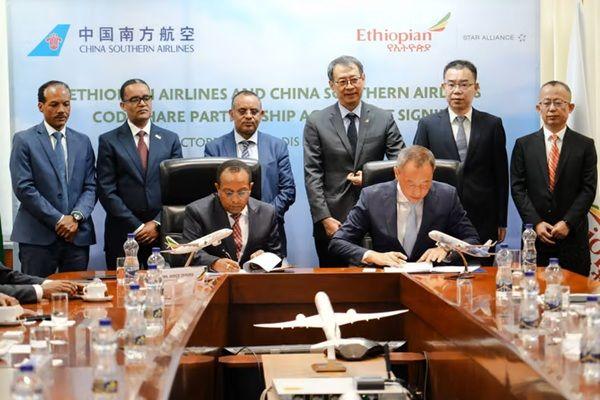
Ethiopian Airways, Africa's biggest airline, and China Southern Airlines, sign deal to widen travel connections as the Chinese airline enters Ethiopia
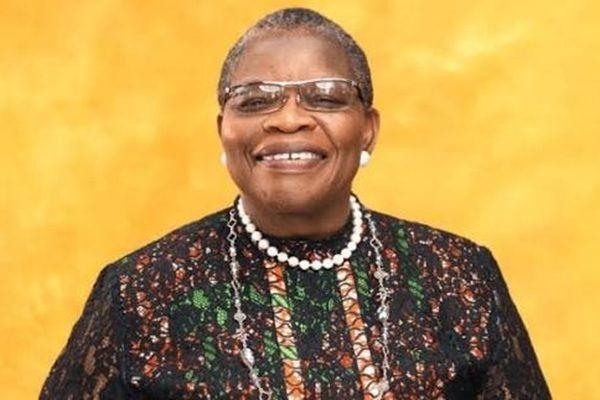
Ezekwesili calls on African nations to stop depending on foreign aid for healthcare
No thief drives a stolen car gently

Are Nigerian service providers poised for Extra Mile following Customer Service Week?
Sterling Bank collaborates with Cascador in $200 million fund to derisk startup business loans
No comments yet — be the first to comment.