

By Maryanne Opene
Nigerian banks and payment technology company Interswitch are expanding efforts to make phone-tap payments more accessible, as financial institutions seek new ways to simplify transactions and strengthen their position in the country’s digital payments market.
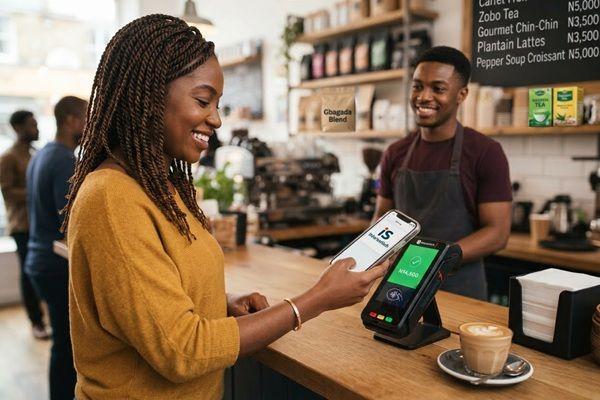
The technology allows customers to pay for goods and services by tapping compatible smartphones or other devices against supported payment terminals. For banks and payment providers, the opportunity is to make electronic payments more convenient while encouraging businesses and consumers to rely on digital channels for everyday transactions.
Interswitch has been developing the infrastructure required to support tokenised payments, working with financial institutions, card schemes and merchants. The company’s efforts form part of a wider push to expand contactless payment options in Nigeria and other African markets, including Kenya and Uganda.
The commercial opportunity comes as payment providers look beyond conventional bank transfers and physical cards to improve the customer experience. Although transfers have become a familiar way for Nigerians to pay businesses, they can require customers to open banking applications, enter account details and complete several steps before a transaction is confirmed.
Phone-tap payments offer an alternative where the necessary technology is available. Customers can use eligible devices to make payments at compatible terminals, reducing the steps involved in completing certain purchases.
For Interswitch, expanding the infrastructure behind these transactions could strengthen its role in the payment ecosystem. The company connects financial institutions and businesses through payment processing and switching services, positioning it to benefit if more transactions move through systems it supports.
Banks also have commercial reasons to participate. Easier payment options can improve digital banking services, encourage customer engagement and help financial institutions compete in a market where convenience increasingly influences consumer choices. However, the actual benefits will depend on how many customers activate the service and how frequently they use it.
The technology relies on payment tokenisation, which replaces sensitive card details with a digital substitute during transactions. This reduces the exposure of original payment information and can support more secure digital payment experiences when combined with appropriate authentication and other safeguards.
At a tokenisation briefing in Lagos, Interswitch Purepay managing director Akeem Lawal described phone-tap payments as a potential next stage in how Nigerians pay for goods and services. Executives from participating financial institutions also highlighted the possibilities for expanding contactless transactions beyond conventional retail settings.
For businesses, the attraction is practical. Retailers could offer customers another way to pay, while restaurants, hotels and other service providers could potentially reduce delays at payment points. Yet these benefits are not automatic. Merchants must have compatible terminals, participating banks must support the relevant services, and customers need eligible devices and payment credentials.
Public transportation could provide another avenue for adoption. Wema Bank executive director Tunde Mabawonku identified Lagos bus and rail services as potential settings for contactless payments. If transport operators and payment providers establish the required systems, commuters could eventually use compatible devices to pay fares.
Such applications could expand the commercial reach of contactless payments by connecting them to frequent, everyday spending. They would also require reliable processing, coordination with transport operators and payment arrangements suited to high volumes of relatively small transactions.
The challenge for the industry is making the technology useful beyond a limited number of participating locations. Nigeria already has an established market for transfers, cards and point-of-sale payments. Phone-tap services must therefore offer a clear advantage if consumers and merchants are to adopt another payment option.
Cost, access and reliability will influence that decision. Large businesses may be better equipped to integrate new payment technology, while smaller merchants may be reluctant to invest without clear evidence of customer demand. Banks and payment providers will need to demonstrate that the service is easy to activate, works consistently and offers practical value to businesses.
Security will also affect consumer confidence. Tokenisation helps protect sensitive payment details, but it does not eliminate every form of fraud. Financial institutions must continue to provide effective transaction monitoring, authentication and support for customers who encounter disputed or unauthorised payments.
The regional dimension offers further growth potential for Interswitch, but adoption will depend on the conditions in each market. Differences in banking systems, merchant infrastructure and consumer payment habits mean that a model successful in one country may require adjustments elsewhere.
For African businesses, the development highlights a broader commercial reality: payment innovation depends on more than the technology itself. Its success requires banks, processors, merchants and customers to participate in a system that works reliably across different points of sale.
Interswitch and its banking partners now face the task of translating infrastructure investment and industry interest into wider practical use. If they can make phone-tap payments accessible across enough businesses, the technology could become a more significant part of Nigeria’s digital commerce market. Its commercial impact, however, will be measured by adoption and sustained usage rather than the introduction of another payment option alone.

Administrator contributes reporting and analysis on money for Brandish.
Keep Reading

The beers are back; International Breweries’ nine-month pre-tax profit rises 22% to N90.44bn

Nigeria’s ₦4.92 trillion cash economy reveals why going cashless is harder than it looks

Dapo Olagunju emerges as pioneer CEO of JPMorgan’s Nigeria operations as CBN grants JPMorgan approval-in-principle

Nigeria receives billions from its diaspora, but how much becomes productive investment?

TotalEnergies Nigeria returns to N8.02 billion pre-tax profit, misses Q3 forecast

No comments yet — be the first to comment.