

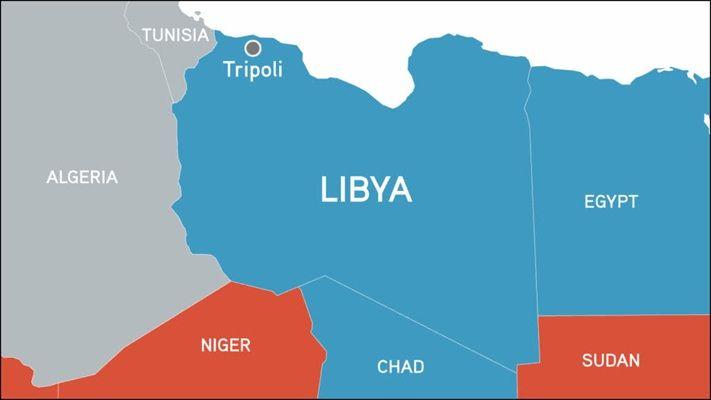
Nigerians living and working in Libya are facing growing anxiety following reports of possible arrests, evictions and attacks against migrants, with warnings circulating in migrant communities urging foreigners to exercise caution and, in some cases, leave the country.
The reports have generated uncertainty among Nigerians in different parts of Libya, particularly as October 1 approaches. Some Nigerians interviewed in recent reports said landlords had asked them to leave their accommodation, while others said Libyan employers and colleagues had warned them against going to work because of concerns about possible security operations.
The warnings have also spread through social media and informal migrant networks. However, there is uncertainty over the source and legal status of some of the messages circulating among migrants.
One widely circulated warning reportedly urged migrants and refugees in Libya to leave the country before October 1. However, available reporting indicates that there was no publicly verified Libyan government decree establishing October 1 as a nationwide deadline requiring all foreigners to leave the country.
This distinction has become important because many Nigerians in Libya are relying on messages shared through social media and personal contacts for information about their safety.
Some Nigerians reportedly said they had been advised by Libyan colleagues to remain indoors and avoid going to work, while others said landlords had begun asking tenants to seek alternative accommodation.
The reported developments have raised particular concern among undocumented migrants, who may face a greater risk of detention or deportation if authorities intensify immigration enforcement.
At the same time, some Nigerians with valid documentation have also expressed concern about the broader uncertainty surrounding foreigners in the country.
Libya has remained a major transit route for Nigerians and other Africans attempting to reach Europe through irregular migration routes. The journey exposes migrants to significant risks, including detention, exploitation, trafficking and dangerous attempts to cross the Mediterranean Sea.
The Nigerian government has repeatedly warned citizens against using Libya as a route to Europe.
The Nigerians in Diaspora Commission said in March 2025 that more than 956 Nigerians had been evacuated from Libya during the first quarter of that year through cooperation involving the International Organization for Migration and the National Commission for Refugees, Migrants and Internally Displaced Persons.
The returnees included 683 females, 132 males, 87 children and 54 infants. NiDCOM said the returnees were brought back in six separate operations between January and March 2025.
The commission also stated that more than 15,000 stranded Nigerians had been evacuated from Libya in previous years through the efforts of the Federal Government and international partners.
More recently, the International Organization for Migration received another group of Nigerian migrants evacuated from Libya. In June 2026, 180 Nigerians, mainly women and children, arrived in Lagos after being assisted to return from the North African country. The IOM said many of the returnees had experienced difficult conditions, including detention and exploitation.
The continuing evacuation exercises demonstrate that the problem of stranded Nigerians in Libya has persisted despite repeated government warnings about irregular migration.
NiDCOM has urged Nigerians seeking opportunities abroad to use legal migration channels rather than relying on traffickers or dangerous routes.
The commission has also warned that some Nigerians who are evacuated from Libya later attempt to return through irregular routes in an effort to reach Europe.
The latest reports have therefore renewed attention on the safety of Nigerians currently living in Libya, particularly those without valid immigration documents or secure accommodation.
For Nigerians who are concerned about their safety, reliable information from Nigerian diplomatic authorities and recognised humanitarian organisations is particularly important because unverified social media messages can create confusion during periods of heightened tension.
The Nigerian government has previously worked with international organisations, including the IOM, to identify stranded Nigerians, arrange documentation and facilitate voluntary returns from Libya. Such programmes have provided a route home for thousands of Nigerians who were unable to return independently.
However, the latest reports suggest that some Nigerians in Libya remain uncertain about what action they should take as warnings continue to circulate.
The situation also highlights the wider difficulties faced by migrants who have established their livelihoods in Libya. Some have lived and worked there for years and may not have the financial resources to immediately leave the country or return to Nigeria.
For those who decide to return, access to travel documents, transportation and registration with the relevant authorities can be essential to completing the process.
While reports of possible attacks and arrests have caused concern among Nigerian communities, the absence of a publicly verified nationwide Libyan government order requiring all Nigerians or other foreigners to leave means that claims circulating online should be treated carefully until confirmed by competent authorities.
The immediate concern remains the safety of Nigerians living in Libya and the ability of relevant authorities and humanitarian organisations to provide accurate information and assistance to those who need it.
NiDCOM has consistently maintained that the Federal Government will continue to protect the interests and welfare of Nigerians in the diaspora while working with relevant agencies and international partners.
As uncertainty persists, Nigerians in Libya are being urged to remain vigilant, verify security information through official channels and seek assistance from Nigerian diplomatic authorities or recognised humanitarian organisations where necessary.
The developments have once again brought attention to the dangers associated with irregular migration and the continuing need for coordinated efforts to protect Nigerians abroad and provide safe pathways for those seeking to return home.

Administrator contributes reporting and analysis on government for Brandish.
Keep Reading

Nigeria’s government to investigate deaths of miners in Niger State, sets up 10-man committee
Prioritise value maximisation of your mineral resources, Nigeria's Vice President advises African leaders

Dangote's investment in Kenya faces legal challenges as 133 Lamu residents sue to halt Ksh 2 Trillion refinery project

Heirs Energies Unveils Digital Transformation Strategy to Boost Production in Nigeria

Glovo invests N54 billion in Nigeria, says market still is the fastest-growing globally

No comments yet — be the first to comment.