

In Nigeria, each time a government or any of its agencies, and other powerful institutions in the private sector, want to make money, they become ingenious by crafting ways to squeeze money from citizens. Often with the disposition and attitude of Muriel the donkey in George Orwell’s Animal Farm, they respond with immediate acquiescence, not complaining, not resisting.
They are mostly scared that any form of resistance could attract repercussions and retribution that are of a scale heavier than the extra tax imposed on them. The fear manifests in various forms: fear of losing their lives, fear of loss of opportunities, fear of being singled out for reprisal, and fear of attracting the government's heavy hand on their businesses.
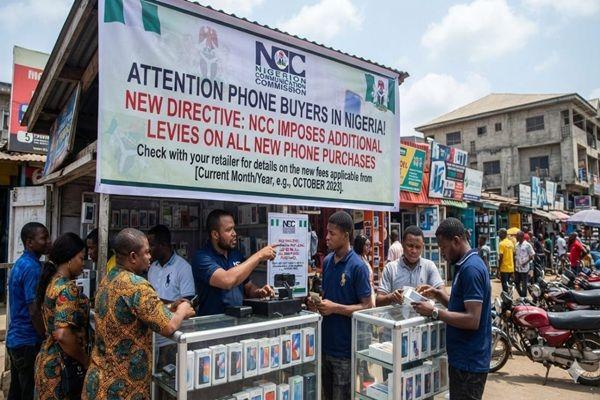
The media has extensively covered the imposition of fees on all mobile devices imported into the country by the Nigerian Communications Commission (NCC). Under the new tag, Device Management Services (DMS), the NCC seeks to collect fees for all mobile phones and other mobile devices imported into the country.
The purpose of this initiative by the NCC is to create a central registry of all SIM-enabled devices operating in Nigeria, and to also block stolen, cloned, counterfeit, and non-type-approved phones in the market.
Mobile device importers have been mandated by that initiative to obtain type-approval from the NCC, upload the International Mobile Equipment Identity (IMEI) numbers of each phone or device, while also paying validation fees which will be verified by Customs.
Any device found to not be registered will be barred from connecting to any of the networks.
Already, the first layer of stakeholders is up in arms against the levy the NCC has decided to impose on imported mobile devices. The Association of Mobile Phones and Allied Products Traders of Nigeria has rejected the move
While claiming that they were not against the advertised DMS, they said they were rather objecting to the proposed payment requirement for newly imported devices.
The President of the association, Musa Haruna Mamza, was widely reported as saying that said the proposed charges would result to increases in the costs of mobile devices, because the traders will cascade the DMS fees down to the final consumers from the original equipment manufacturers (OEMs), the distributors and the dealers.
Mamza said the association was concerned about the looming reality of Nigerians paying more paying additional costs for the registration of devices, arguing that the burden should not be transferred to consumers.
“The companies that produce the devices refuse to say they will bear the cost, and so the OEMs, dealers or distributors will be at the cost of paying that fee. Then they will transfer it to the end user,” he said.
According to him, the association supports the registration of mobile devices but wants the NCC to reconsider the payment component and engage stakeholders more extensively before implementation.
Mamza also faulted the level of awareness created among mobile phone traders ahead of the proposed implementation, saying many businesses had not been adequately sensitised or trained on the new system.
But beyond the potential higher cost of entry for mobile phones in the country is also the issue of technicalities that can complicate issues for the ordinary consumer. Across social media recently, I have read stories of people who discovered that they have been classified as dead when they went to obtain their permanent voter’s card (PVC).
One particularly interesting story talked about a lady who was referred to the National Population Commission to verify whether she was still alive or dead, only to discover that her husband had his signature on her death certificate.
In the mobile phone market, many citizens who properly registered their phone numbers at one point were forced out of the networks, purportedly because a phone number which they had registered was no longer registered. Similar cases persist across Such is the level of forgery and fraud in the country. across the more than 200 million active mobile phone connections in Nigeria.
Assuming Nigerians endure another fees regime to get their mobile phones registered, what is the guarantee that someone would not wake up one morning to the discovery of a disconnected mobile phone? Who would pay the price for this injury?
Again, what would happen if the dealers cut corners in the registration and then sell their phones to unsuspecting citizens? How does the NCC ensure that ordinary consumers do not bear the consequences of such misdeeds?
Again, it is important to bring security into the discussion. To what extent would this new regime ensure device security? Phones are capable of being tracked already using the IMEI number. What is then new in the NCC introduction apart from the collection of fees?
It is a huge market for NCC here. There are, as mentioned earlier, more than 200million mobile connections in Nigeria. There are more than 96.27 million mobile phone users in the country who use smartphones. Being trendy people, Nigerians routinely change their mobile phones. So let is assume that NCC will charge N200 for the registration of each mobile phone, and assuming that 50 million people change their mobile phones over the next year, that is a dizzying inflow of N10 billion.
That is at the modest base of N200 per mobile phone. NCC has not announced how much the fee will eventually be.
Again, questions will be asked about the fairly used phones that are imported from Europe and sold in Nigeria. Even more questions have to be asked about Nigerians who reside abroad and return with their own mobile phones, insert their Nigerian phone lines, and use them while in the country. How is NCC going to deal with the millions of people in these categories?
Lastly, how is this device registration better or comparable to the SIM registration that started in Nigeria in February 2011? If that one, which involved the deployment of equipment and other resources all over the country, did not demand fee payments from citizens (and still does not), why should the registration of devices attract fees?
I have researched and understood that many countries require IMEI registration for these mobile devices. But it was not stated whether citizens who buy phones are charged fees. My reading suggested that it is for visitors and immigrants. Does it not amount to double taxation to impose this registration on citizens? Someone who buys a phone would have paid his r her VAT, so what is the fee for IMEI registration called?
It seems this is a great opportunity for the NCC and the Customs to make easy billions from an industry flowing with milk and honey. If Nigerians can afford to buy as many as 10 million iPhones, there’s no way they would grumble about extra N1,000 or slightly more to pay for DMS.
But if the overriding purpose is security, there is no reason the government (through the NCC) should make Nigerians pay for a service that forms part of the reasons why government is in place everywhere in the world.

Administrator contributes reporting and analysis on telco for Brandish.
Keep Reading
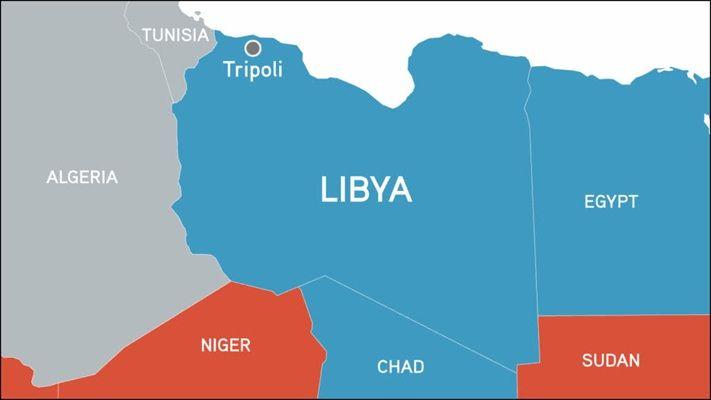
Nigerians in Libya Face Growing Fear of Arrests and Evictions as October 1 Warnings Spread

Dangote's investment in Kenya faces legal challenges as 133 Lamu residents sue to halt Ksh 2 Trillion refinery project

Heirs Energies Unveils Digital Transformation Strategy to Boost Production in Nigeria

Glovo invests N54 billion in Nigeria, says market still is the fastest-growing globally
GTCO pumps N603 billion Profit before tax for half year ended, June 2026, declares N1 dividend per share

Don't you think that this registration would also infringe on privacy laws? How safe will the users of the registered phones be especially when it comes to private information and communications?