

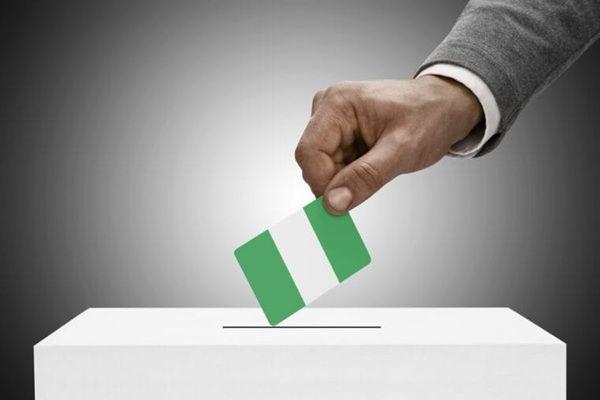
As Nigeria enters another season of heightened political communication, the familiar signs are beginning to appear: posters, billboards, rallies, interviews, jingles, social media posts, endorsements and increasingly energetic exchanges between political camps.
But there is a fundamental question that should come before all these:
What does the candidate stand for?
That is essentially a brand question. A political candidate is a brand. Not because politics should be reduced to selling soap, beverages or telecommunications services, but because the fundamental principles of brand building apply wherever people must make choices between competing alternatives.
A brand is ultimately about meaning. It is what a name represents in the mind. It is the collection of expectations, associations, experiences and emotions that people attach to that name. That applies to Pepsi Cola. It applies to Peak Milk. It applies to Maltina. It applies to Globacom. And it applies, in a different and much more consequential context, to political candidates.
BUT FIRST AND FOREMOST: FAME IS NOT A BRAND
One of the easiest mistakes in political communication is to confuse awareness with brand strength. A candidate may be well known. His or her photograph may appear everywhere. The candidate may even dominate television interviews, trend regularly on social media and attract enormous crowds at rallies. But ask a voter:
“What exactly does this candidate represent?”
If the answer is unclear, inconsistent or varies dramatically from person to person, there may be high awareness but weak positioning. That is precisely the distinction marketers make between being known and being known for something.
Strong brands occupy identifiable territory in people’s minds. The political candidate therefore needs to answer some deceptively simple questions:
- Who am I?
- What do I stand for?
- What problem am I seeking to solve?
- Why should citizens believe me?
- How will their lives be different if my proposition succeeds?
And perhaps most importantly:
6. Why me rather than the alternatives?
Until those questions are answered clearly, communication risks becoming noise.
POLITICAL COMMUNICATION IS NOT RANDOM COMMUNICATION
Campaign organisations sometimes appear to operate on the assumption that the more frequently a candidate communicates, the stronger the campaign becomes.
Not necessarily.
A candidate speaks about education today, unemployment tomorrow, corruption the following day, infrastructure afterwards and perhaps agriculture at the weekend. Every issue may be important. But what connects them? Without an organising idea, voters receive many messages without necessarily receiving the message. This is where strategy becomes important.
A strong political brand requires a central proposition from which individual communications flow. Different subjects can be discussed, but they should continually reinforce a recognisable larger meaning. The world’s strongest commercial brands already understand this.
Nike can advertise hundreds of different products without abandoning its larger territory of human achievement and performance.
Dove can execute numerous campaigns while retaining a recognisable philosophy around real beauty.
The same discipline matters in political communication. Individual speeches, advertisements, interviews and social media posts should not behave like unrelated islands. They should belong to the same strategic continent.
AND PLEASE, BRANDING IS NOT COSMETICS!
Political branding is also sometimes misunderstood as just visual identity. While colours matter; symbols matter; photography matters; typography matters; slogans matter, none of these, by itself, constitutes a brand. Changing the candidate’s wardrobe, producing better photographs or designing more attractive posters may improve presentation, but does not answer the strategic question:
What should this person mean to the electorate?
Brand strategy comes before brand cosmetics. The communication team must first define:
- The candidate’s positioning
- Proposition
- Values
- Personality, and
- Central narrative.
Only then should advertising and other communication expressions bring that strategy to life. Otherwise, beautifully produced communication may simply amplify strategic confusion.
LET US ALSO REMEMBER, AUTHENTICITY MATTERS
There is another complication. Unlike a manufactured product, a political candidate is a human being with a history. People can examine previous statements, public records, behaviour, relationships and decisions. In the digital age, yesterday rarely disappears. Political branding therefore cannot simply manufacture an attractive personality and impose it upon the electorate.
The strongest political brand should emerge from something credible and authentic about the candidate, translated into a proposition relevant to citizens. Branding should clarify reality, not fabricate it. If the gap between the projected candidate and the experienced candidate becomes too wide, credibility eventually suffers.
SO, FROM WHERE DOES IT START? WITH THE BRAND
Before buying advertising space, printing another million posters or commissioning another campaign jingle, political communication managers might therefore benefit from returning to first principles:
- Define the brand.
- Define what the brand stands for.
- Define the central promise.
- Define the evidence supporting that promise.
- Define the emotional and rational reasons citizens should pay attention.
- And then communicate these consistently.
Because elections may ultimately be decided at the ballot box, but long before voters reach that ballot box, another contest has been taking place:
The contest for meaning in the voter’s mind.: And that is where political brand building begins.
Next in MSS-08.2, we will examine the second topic in the theme series:
Building The Political Brand: (Strategy, Message & Communication)
Please feel free to comment, share and invite others to subscribe to The MarCom Strategic Series (MSS). Thank you.
‘Lolu Akinwunmi
Publisher, The MarCom Strategic Series (MSS)
lakinwunmi@primagarnetafrica.com

Administrator contributes reporting and analysis on leadership for Brandish.
Keep Reading
Uche Nnaji defies the old order, favours enterprise and capacity by selecting Chijioke Ugwu as his running mate for 2027 governorship election in Enugu
Nigerian court releases passport of Enugu State governorship hopeful Uche Nnaji
Saudi billionaire, Al-Amoudi stakes $116 million to back hotel expansion in Ethiopia, set to employ 2,600 people
Nigerians in Libya Face Growing Fear of Arrests and Evictions as October 1 Warnings Spread

Dangote's investment in Kenya faces legal challenges as 133 Lamu residents sue to halt Ksh 2 Trillion refinery project
No comments yet — be the first to comment.