

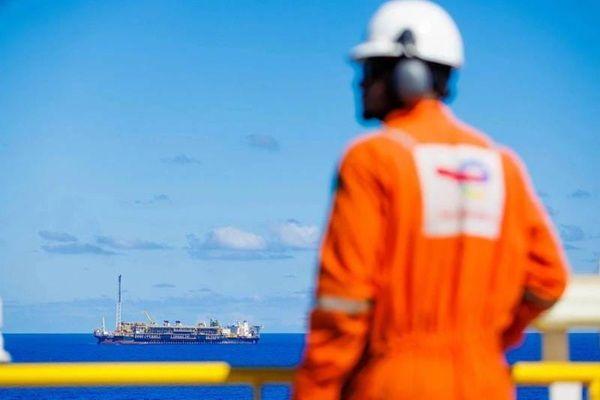
AMNI International and TotalEnergies have taken the Final Investment Decision (FID) on the development of Nigeria’s long-delayed Ima gas field, committing about $800 million to a project that could begin production in 2028 and supply a significant share of the gas required for Nigeria LNG’s Train 7 expansion.
The decision, announced on Wednesday, marks the commercial breakthrough for a gas resource discovered in 1973 that has remained undeveloped for more than five decades.
President Bola Ahmed Tinubu welcomed the FID as another indication that reforms in Nigeria’s oil and gas sector are beginning to unlock projects that had been held back by regulatory, commercial and financing constraints.
The Ima field straddles Oil Mining Leases 112 and 117 in shallow waters near Bonny Island, Rivers State. TotalEnergies, which will operate the development, holds a 40 per cent interest, while Nigerian independent producer AMNI International owns 60 per cent. The field will be connected to Nigeria LNG through a 22-kilometre pipeline.
TotalEnergies said production is expected to start in 2028, with output reaching a plateau of about 350 million standard cubic feet per day, equivalent to more than 60,000 barrels of oil equivalent per day.
The company said the gas will provide about one-third of the feedgas required for the ongoing Train 7 expansion at Nigeria LNG, which is designed to increase the Bonny Island plant’s liquefaction capacity from 22 million tonnes per annum to 30 million tonnes.
The significance of the project lies as much in the time it has taken to reach development as in its production potential.
Nigeria has spent decades struggling to convert its enormous gas reserves into commercial production and domestic economic value.
The country had about 215.19 trillion cubic feet of proven associated and non-associated gas reserves as of January 1, 2026, according to the Nigerian Upstream Petroleum Regulatory Commission.
The Ima project illustrates the gap between having resources underground and having the commercial conditions needed to develop them.
The field’s development cost has also been reported differently by the project sponsors and government.
While the presidency described the FID as an $800 million investment, AMNI said the overall development cost is approximately $1.108 billion and that the field contains independently confirmed gross reserves of about 1.28 trillion cubic feet of non-associated gas.
AMNI and TotalEnergies are expected to develop the field through a single offshore platform, with gas transported directly to the NLNG facility.
TotalEnergies described the project as a relatively low-cost, low-emissions development, with power supplied from shore, no routine flaring and permanent methane monitoring.
The presidency said Ima is the fourth major gas project to reach FID since Tinubu took office, following the Iseni, Ubeta and HI projects.
The administration has made gas development a central part of its energy strategy, seeking to use the resource not only for LNG exports but also for electricity generation, fertiliser and petrochemical production, industrial feedstock and other domestic uses.
Special Adviser to the President on Energy, Olu Verheijen, said the Ima development demonstrated the objective of reforms aimed at making previously stranded resources commercially viable.
The administration has pointed to the 2021 Petroleum Industry Act as the foundation for sector reform, followed by presidential directives issued in 2024 aimed at improving fiscal competitiveness, reducing contracting delays and lowering project costs.
Whether those reforms can sustain the current investment momentum will depend on how quickly other projects move from FID to actual construction and production.
That distinction is important for Nigeria. An FID represents a commitment to proceed with a project, but the economic benefits that policymakers are targeting, additional gas production, export earnings, jobs, tax and royalty revenue and domestic industrial supply, will materialise only as construction advances and the field comes on stream.
The Ima project also carries a significant local-content and domestic-financing component.
According to the presidency, Nigerian financial institutions have arranged about 77 per cent of the project’s financing, while around 60 per cent of the workforce is expected to come from host communities, including Bonny, Finima and Andoni in Rivers State.
That financing structure could be important for Nigeria’s oil and gas industry, where the availability and cost of capital have often been major constraints on upstream investment.
The greater participation of Nigerian banks also means a larger share of the financial activity associated with the project can remain within the domestic economy, although the eventual economic impact will depend on local procurement, contractor participation and the ability of Nigerian companies to capture a meaningful portion of the supply chain.
AMNI’s 60 per cent interest also highlights the increasing role of indigenous producers in Nigeria’s upstream sector.
One of the clearest commercial benefits of the project is its link to Nigeria LNG.
TotalEnergies said gas from Ima will supply roughly one-third of the feedgas required for Train 7, whose expansion is expected to lift NLNG’s liquefaction capacity from 22 million tonnes per year to 30 million tonnes.
For Nigeria, the additional feedgas could support LNG exports and foreign-exchange earnings at a time when the country continues to seek more stable sources of dollar revenue.
The project also comes as Nigeria tries to address one of the central contradictions in its energy sector: possessing one of the world’s largest gas resource bases while facing inadequate domestic gas supply and unreliable electricity generation.
The NUPRC’s latest reserves data put Nigeria’s gas reserves at 215.19 trillion cubic feet, with an estimated reserves life of 85 years.
The challenge has therefore never been simply the size of the resource base. It has been converting reserves into bankable projects, building the infrastructure needed to evacuate the gas and creating a commercial framework capable of attracting long-term capital.
The Ima FID provides another test of whether Nigeria can make that transition.
Tinubu said the government would continue working to create conditions for investors to develop more of the country’s gas resources, arguing that natural resources only create broad economic value when they are converted into productive activity.
For AMNI and TotalEnergies, the immediate task is now to move from investment decision to construction and, ultimately, production.
If the current schedule holds, gas from the 53-year-old discovery could begin flowing in 2028 and become part of the supply base supporting Nigeria’s next phase of LNG expansion.

Administrator contributes reporting and analysis on energy for Brandish.
Keep Reading

Dangote's investment in Kenya faces legal challenges as 133 Lamu residents sue to halt Ksh 2 Trillion refinery project
Heirs Energies Unveils Digital Transformation Strategy to Boost Production in Nigeria

Ruto tours Dangote's Lagos refinery as group targets $36 billion revenue
Senegal turns to Turkey for up to $3.5 billion refinery push as it targets West Africa’s fuel market
US, Iran still sharply divided as diplomacy with hopes of resolving amid Strait of Hormuz stand-off
No comments yet — be the first to comment.