

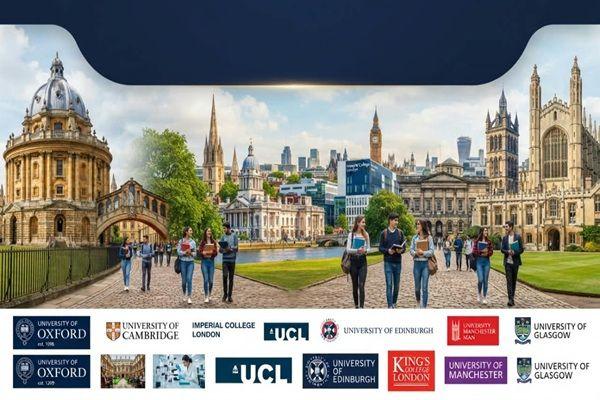
The United Kingdom’s Home Office data reveals that 22.7 per cent of study visa applications from Nigerians to universities in the UK were withdrawn in the first half of 2026, up from 4.5 percent during the same period in the previous year.
The increasing annulment of admission offers to international applicants, particularly Nigerians and Pakistanis, is tied to fears that rising student visa refusals could lead to a ban on recruiting overseas students.
The British government has tightens rules for universities sponsoring international students, with institutions now facing the risk of being barred from recruiting overseas students if more than five per cent of prospective international students they admit have their visa applications rejected. The threshold was previously 10 percent.
Universities said the withdrawals were largely driven by a doubling of student visa refusals in the first six months of 2026, alongside stricter rules that put institutions at risk of losing their licences to recruit international students if more than five per cent of applicants with offers have their visa applications rejected.
Although visa applications can be withdrawn for other reasons, universities told Financial Times that the increase was largely driven by institutions revoking offers to avoid breaching the compliance threshold.
Vice-chancellor of the University of Sunderland, Sir David Bell, said the increase in visa refusals had prompted universities to take preventive measures.
“The recent and unexpected spike in visa refusals has prompted pre-emptive action in several universities. This has involved pulling back from international markets where a tougher approach is being taken to visa applications,” he said.
The Director of Universities UK International, Jamie Arrowsmith, which represents institutions recruiting overseas students, acknowledged the need to maintain confidence in the immigration system but criticised the unpredictability of visa processing.
“Many refusals appear to rest on flawed, inconsistent and highly subjective reasoning, forcing universities to withdraw offers at scale to avoid breaching compliance thresholds,” he said.
The developments have raised concerns about the financial outlook for universities in the UK, which rely on tuition fees from international students as a significant source of income.
Vanessa Wilson, chief executive of University Alliance, a group representing 20 professional and technical universities, warned that the pressure could lead to job losses and closures.
“This is going to result in restructures, which inevitably results in job losses, course closures, campus closures,” she said.
The FT also reported that some universities had cited what they considered questionable reasons for visa refusals, including applicants’ previous consideration of studying in other countries and a doctoral applicant’s inability to name course modules that did not exist for the research degree.
The Home Office said international students made a positive contribution to Britain but insisted that recruitment must not undermine the country’s immigration system.
It said it was offering universities support where necessary to improve their recruitment practices.

Administrator contributes reporting and analysis on leadership for Brandish.
Keep Reading

Ethiopian Airways, Africa's biggest airline, and China Southern Airlines, sign deal to widen travel connections as the Chinese airline enters Ethiopia

Ezekwesili calls on African nations to stop depending on foreign aid for healthcare

Nigeria’s opposition is talking unity again, but can Atiku, Obi and Makinde agree on 2027?

No thief drives a stolen car gently

Are Nigerian service providers poised for Extra Mile following Customer Service Week?
No comments yet — be the first to comment.